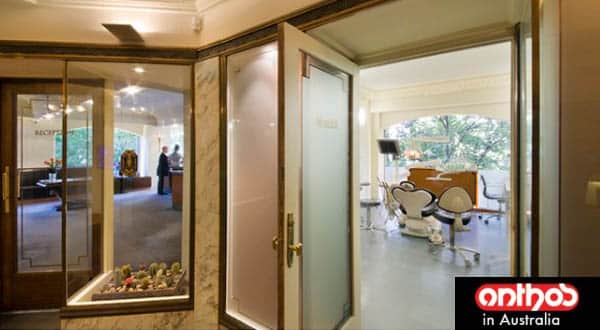
Surgery Portfolio: Smile Solutions
Media item: feature article
Date published: 7 July 2015
Subject: dental practice design and equipment
This page records the media item. The original article is the property of its publisher and is not reproduced here.
What is actually in the room
Most people have sat in a dental surgery dozens of times without knowing what any of it does. For anxious patients in particular, knowing is genuinely useful — unfamiliarity is a large part of the fear. See Dental Anxiety and How can I ease my anxiety about visiting the dentist?
Here is the room, item by item. Our Technology is the current list.
The chair
More than a seat. It positions you so the practitioner can see and reach the working area without holding an unsupported posture for an hour — which is why the chair reclines: not for your comfort, primarily, but because musculoskeletal injury is the most common occupational health problem in dentistry and it ends careers.
If lying flat is uncomfortable — in late pregnancy (Is it safe to visit the dentist during pregnancy?), with reflux, with back or breathing problems, or because it makes you panic — say so. The chair can be adjusted, and treatment can be done more upright.
The delivery unit and handpieces
The arm carrying the instruments.
- The high-speed handpiece — the drill. It is an air turbine running at very high speed, water-cooled. The water is not optional: cutting enamel dry generates enough heat to damage the pulp. The noise is the air turbine, and it is worse than the sensation. See Tooth Fillings and Why do I need a filling?
- The slow-speed handpiece, for removing softened decay and for polishing. Lower pitch, different feel.
- The three-in-one syringe — air, water, or both. The cold air is what makes a sensitive tooth jump — What to do if you suffer from sensitive teeth.
- The ultrasonic scaler, which removes calculus by vibration with a water spray, rather than by scraping — Dental Cleans and Hygienists and When do you need deeper cleaning?
All three produce aerosol, which is why they were restricted during the pandemic and why ventilation is now treated as infection control — see Rafa's dental day at Smile Solutions.
Suction
High-volume suction removes water, aerosol and debris. Low-volume (the "saliva ejector") sits in the cheek.
This is the equipment most responsible for whether an appointment feels tolerable, and it is usually the dental assistant operating it. Good suction is a genuine skill — the people who do it are on the team pages.
The curing light
The blue light with the orange shield. Composite fillings set on command rather than on a timer — the light triggers polymerisation. The orange shield protects your eyes and the operator's; the wavelength is intense. See Dental fillings: porcelain, amalgam or composite resin? and Composite bonding.
The X-ray equipment
Intraoral units for bitewings and periapicals. OPG for a panoramic view of both jaws. Cone beam CT for three-dimensional imaging.
The doses are small, and the figures are published. The International Atomic Energy Agency gives typical effective doses of 1 to 8 microsieverts for an intraoral dental X-ray, 4 to 30 microsieverts for a panoramic examination, and 2 to 3 microsieverts for a cephalometric one — the IAEA notes that doses at the high end of that range are equivalent to a few days of natural background radiation, similar to a chest radiograph.
Cone beam CT is the outlier, and the difference is substantial. The IAEA puts CBCT at 50 microsieverts or below for small- or medium-sized scanning volumes and around 100 microsieverts for large volumes, and observes that CBCT doses "cover a wide range, but may be tens or even hundreds of µSv of effective dose higher than conventional radiographic techniques". A 2022 systematic review in BMC Oral Health put the comparison in relative terms for one common indication: a small-field CBCT of a lower wisdom tooth involves approximately a five-fold increase in radiation compared with an OPG, with preoperative costs approximately four times greater — and its conclusion was that "CBCT should not be used routinely to assess" lower third molars, because it "is unlikely to reduce risk of nerve injury even in most high-risk cases". So it should be reserved for cases where it genuinely changes management. See How safe are dental x-rays and How safe are dental X-rays and when do they become unsafe?
Radiation apparatus is licensed and regulated in Victoria, rooms require appropriate shielding, and operators must be qualified. The governing principle is justification: an image is taken because it will change a decision, not on a schedule. The published formulation of that principle is worth having in full — the number of radiographs is reduced "by avoiding screening or routine execution", and instead "strict and individualized justification should determine the prescription of each radiograph. A justified radiograph should make a substantial contribution to distinguishing between treatment options." That is a test you are entitled to ask a practitioner to apply out loud.
The intraoral camera and scanner
A small camera that puts your tooth on a screen. Ask to be shown the tooth being discussed — it is the single easiest way to understand a treatment plan. Understanding Your Treatment covers the rest of that conversation.
A digital scanner replaces impression material for crowns, aligners and appliances. If you gag, ask whether scanning is available — see Same-Day CEREC Restorations, Dental Crowns and Invisalign. There is also The Mock-Up Reveal, which uses the same scans.
Rubber dam
The sheet isolating one or two teeth. It looks unpleasant and it is one of the most protective things in dentistry — it keeps saliva and its bacteria out of the working field, keeps materials dry so they bond, and stops small instruments and debris going where they should not.
For root canal treatment it is not optional. The British Endodontic Society's Guide to good endodontic practice states that its use during endodontic treatment "is mandatory from a patient safety, as well as infection control standpoint", and the European Society of Endodontology's S3-level clinical practice guidelines recommend "a meticulous aseptic technique and optimal surgical field including the use of dental dam". It also shows up in outcomes: large registry studies from Taiwan and Korea concluded that recorded use of a rubber dam significantly positively affected the five-year tooth survival rate. Many people find it more comfortable than not having it, because nothing else touches the tongue or cheek. See Everything you need to know about root canal treatment.
The parts you never see
The sterilisation room
The most important room in the building.
Australian practices work to national infection prevention and control standards, and the physical requirement is a one-way workflow: contaminated instruments enter at one end, and are cleaned, inspected, packaged, steam-sterilised in an autoclave, and stored — never crossing back.
The autoclave is validated and monitored using mechanical, chemical and periodic biological indicators, and records are kept of every cycle so that if a cycle later fails validation, the practice can identify which instruments were in it and which patients they were used on.
That traceability is the whole reason for the paperwork, and it is a completely reasonable thing to ask about — as are the other questions you have always wanted to ask your dentist.
Single-use items are single-use. Needles, local anaesthetic cartridges, gloves, suction tips, prophy cups, and many burs.
The Australian Dental Association treats this as a national benchmark rather than a local courtesy, listing among the things Australian patients can rely on that "infection prevention and control standards are of international best practice level and are enforced by the Board", that practices are supplied with safe water "which is essential for satisfactory infection control", and that equipment and materials "comply with the highest international standards and are subject to rigid scrutiny and approval by the Therapeutic Goods Administration".
The waterlines
Dental unit waterlines can form biofilm in narrow tubing. Flushing, treating and periodically testing them is a routine practice obligation and a real, if low-frequency, infection risk when neglected.
The plant room
Medical-grade compressed air drives the handpieces — dry, oil-free and filtered, because it goes into your mouth. A central suction plant provides the vacuum. Both are usually remote, because they are noisy.
Waste
Three separate streams: general, clinical (including sharps), and amalgam. An amalgam separator is required so that mercury does not enter the sewer — an environmental obligation, not a patient safety one.
Emergency equipment
Emergency drugs in date, oxygen, and a defibrillator, with staff holding current resuscitation training. Anaphylaxis and medical emergencies in the chair are rare and time-critical. Dental emergencies are a separate matter — Emergency Dentistry.
Why the room is designed the way it is
Three constraints drive every dental fit-out, in this order:
- Infection control workflow, which dictates room adjacencies before anything else
- Radiation shielding and the licensing of imaging rooms
- Servicing — air, suction, water and power to every chair
Everything aesthetic comes fourth, and in a heritage building it comes fourth with additional constraints, which is covered at Inside the Manchester Unity Building. The in-house laboratory has its own set of requirements again.
And the standing caveat: a good-looking surgery tells you nothing about the dentistry done in it. Under section 133 of the National Law, advertising a regulated health service must not be "false, misleading or deceptive or ... likely to be misleading or deceptive" and must not create "an unreasonable expectation of beneficial treatment" — which is what photographs of premises presented as evidence of clinical quality would do. The verifiable facts are on the AHPRA register at ahpra.gov.au — free, in a minute, and set out for this practice on Dentists & Registered Specialists.
Related pages: Interview with Dr Kia Pajouhesh at the 2014 Telstra Business Awards, Meshel & Tommy Show: Tommy's Appointment, Rafa's dental day at Smile Solutions, General Dentistry, and the rest of the media record.
Common questions
Can I ask why a particular X-ray is being taken?
Yes, and it is the right question. The governing principle is justification, and the published formulation is that routine or screening radiographs should be avoided in favour of "strict and individualized justification", where "a justified radiograph should make a substantial contribution to distinguishing between treatment options". For cone beam CT the bar is higher again, because the dose is materially larger: a 2022 systematic review found a small-field CBCT of a lower wisdom tooth carries roughly five times the radiation of an OPG at around four times the cost, and concluded it should not be used routinely for that purpose.
If the worry is nerve damage from a lower wisdom tooth, does a cone beam CT prevent it?
On the current evidence, no — and this is the clearest example of an image that feels reassuring without changing the outcome. The 2022 review's conclusion is that CBCT "is unlikely to reduce risk of nerve injury even in most high-risk cases", at roughly five times the radiation of an OPG and about four times the preoperative cost. The risk it is aimed at is real but small: Cochrane, citing published surgical data, lists permanent nerve damage in up to 0.5 per cent of cases among the complications of removing an impacted wisdom tooth. What does appear to move that number is the surgical approach rather than the imaging. A systematic review of four controlled studies comparing coronectomy — deliberately removing only the crown and leaving the roots undisturbed next to the nerve — against complete removal found a pooled risk ratio for inferior alveolar nerve injury of 0.11 (95% CI 0.03 to 0.36), with no detected difference in post-operative infection (RR 1.03, 0.54 to 1.98) or in pain at one week (RR 1.14, 0.57 to 2.30), and a non-significant trend toward less dry socket (RR 0.55, 0.28 to 1.05). Read those numbers with their limits: four studies, a search ending in 2011, and a wide confidence interval. A second review reached the same conclusion on sensation and added the trade-off you are accepting — the retained root fragment migrates, on average about 2 millimetres within two years — and it stated the indication narrowly: coronectomy is indicated "when the mandibular third molar is in contact with the inferior alveolar nerve and complete removal of the tooth may cause nerve damage." The reliable re-operation rate for a retained root is not established in the literature we hold. Cochrane's own 2020 review of coronectomy records "Not reported" against every one of its primary outcomes, so it contributes no evidence either way. The useful question in the chair is therefore not "can we scan it first" but "how close is it to the nerve, and does that change how you would take it out". See Wisdom Teeth and Oral & Maxillofacial Surgeons.
Why does the practice ask about allergies before anything touches me?
Because a handful of substances used in the room are known causes of serious reactions, and the one most people have never heard of is chlorhexidine — the antiseptic in many mouthrinses, in surgical skin preparation and in the coating of some medical devices. ASCIA, the Australasian Society of Clinical Immunology and Allergy, describes it as "a highly effective antiseptic agent" whose allergic reactions are "rare, but are increasing in frequency, possibly due to increased use of chlorhexidine containing products". Two things make it unusually easy to be caught by twice: "the presence of chlorhexidine is often not obvious, and labelling can be inconsistent", and "there is no universal symbol identifying that a product contains chlorhexidine" — with the result that "people with chlorhexidine allergy often have more than one reaction due to misdiagnosis or accidental re-exposure". The serious reactions are associated with a particular route: ASCIA notes that "anaphylaxis to chlorhexidine usually occurs when it enters the body through an opening of the skin during a medical procedure", and Australian Prescriber's review of mouthrinses states that anaphylaxis "does not appear to have occurred as a result of using chlorhexidine mouthrinse to maintain periodontal health". So: rinsing is not the hazard, but a known allergy is genuinely worth declaring, because it changes what is used. If you have ever had an unexplained reaction during a medical or dental procedure, say so — and if you carry an adrenaline injector, bring it. That is also why the room has oxygen, in-date emergency drugs and a defibrillator, and why anaphylaxis is treated as time-critical rather than as a possibility to be watched.
I was given a mouthwash after treatment. Should I keep using it?
Probably not indefinitely, and the reason is specific rather than cautious. Australian Prescriber's position on mouthrinses in general is that "mechanical removal of plaque through frequent and efficacious brushing and flossing is the principal means of preventing periodontal diseases", that rinsing "should always be used in conjunction with mechanical hygiene", and that "mouthwashes should only be used for short periods of time and should never be the sole means of oral hygiene". The Cochrane review of chlorhexidine tested it only "as an adjunct to mechanical oral hygiene procedures" — so nothing in the evidence base supports it replacing a clean. Chlorhexidine specifically is described as "currently the most effective mouthwash for reducing plaque and gingivitis" and is "not recommended for long-term use due to its numerous adverse effects. These include tooth and restoration staining, soft tissue staining, increased calculus deposition, unpleasant taste, taste alteration, burning sensation, desquamation and mucosal irritation" — the staining and the extra calculus being the ones that bring people back to the hygienist. Two practical details that are easy to get wrong: because chlorhexidine interacts with fluoride and with the detergent in toothpaste, "it should be used after rinsing with water or 0.5–2 hours after using toothpaste"; and fluoride mouthwashes "are not indicated in children younger than six years of age as the risk of ingestion is high". If you were given a rinse for a defined reason — a surgical site, a short course for gum inflammation, halitosis — ask when to stop, and when your next clean should be. See Dental Cleans and Hygienists.
Practical details
Smile Solutions, Level 1, 220 Collins Street, Manchester Unity Building, Melbourne VIC 3000. Phone 13 13 96, or theteam@smilesolutions.com.au. Monday–Friday 8.00am–6.00pm, Saturday 8.30am–1.30pm, Sunday by appointment. Directions are on Location; enquiries go through Contact Us.
Every practitioner's registration can be verified free on the AHPRA public register at ahpra.gov.au.
This page records a published feature and its date, with general information. It is not a diagnosis, a treatment plan or a claim about clinical quality. Dose figures quoted are the publishers' typical values for the examinations named and vary with equipment and technique. Third-party published content is not reproduced.
Smile Solutions trades under ABN 28 193 514 103.
Images on This Page
-
https://www.facebook.com/tr?id=800557773428361&ev=PageView&noscript=1
(no alt text)
-
https://www.smilesolutions.com.au/wp-content/uploads/2025/10/calendar_month.svg
(no alt text)
-
https://www.smilesolutions.com.au/wp-content/themes/arcadian-wordpress-theme/assets/images/smile_solutions_logo_white.png
Smile Solutions Logo
-
https://www.smilesolutions.com.au/wp-content/themes/arcadian-wordpress-theme/assets/images/smile_solutions_logo_purple.png
Smile Solutions Logo
-
https://www.smilesolutions.com.au/wp-content/uploads/2019/07/Anthos-Surgery-Portfolio-Smile-Solutions-1.jpg
Anthos Surgery Portfolio Smile Solutions
-
https://www.smilesolutions.com.au/wp-content/themes/arcadian-wordpress-theme/assets/images/family_owned_bussiness.png
Family Owned Business
-
https://www.smilesolutions.com.au/wp-content/themes/arcadian-wordpress-theme/assets/icons/icon--phone.svg
Smile Solutions Contact
-
https://www.facebook.com/tr? id=800557773428361&ev=PageView&noscript=1
(no alt text)