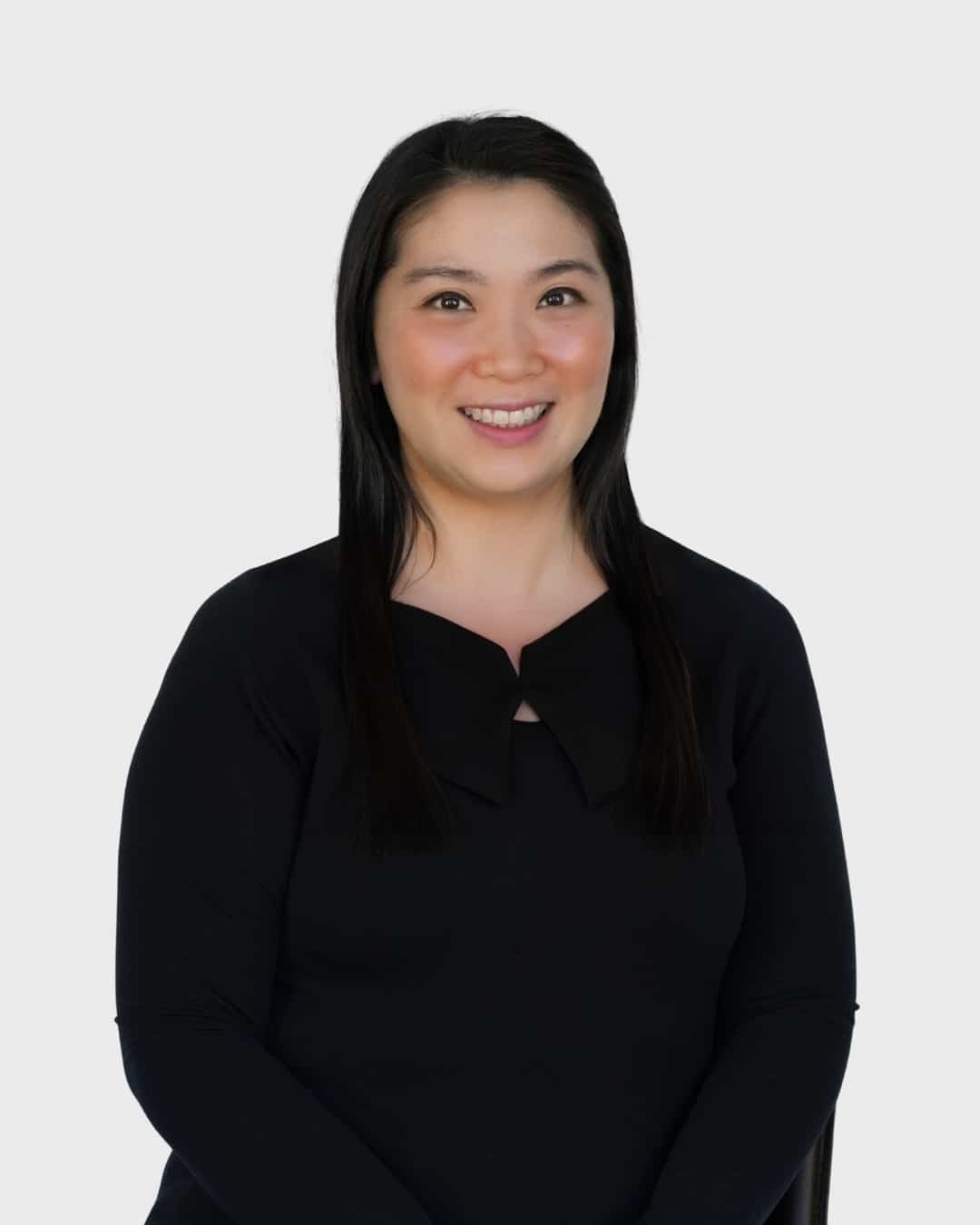
Cathy Huynh, Oral Health Therapist
Role: Oral Health Therapist, Smile Solutions
Qualifications: BOH (La Trobe)
Registration: DEN0001644295 — Dental Practitioner, Oral Health Therapist, General Registration
Registration can be verified free on the AHPRA public register at ahpra.gov.au.
Background
Cathy graduated with a Bachelor of Oral Health Sciences from La Trobe University in 2011, and has been caring for patients in both general and orthodontic practices since. See General Dentistry and Orthodontics.
At her first practice after university she was trained by the University of Melbourne's orthodontic lecturers, giving her a strong orthodontic grounding early in her career.
She has written three of the practice's articles:
- Is soda water bad for your teeth?
- How can I improve the whiteness of my teeth?
- Oral Health Care While Pregnant
What an oral health therapist is
This is the registration category most people have never heard of, and it is worth explaining because it is not the same as a dental hygienist.
An oral health therapist holds dual qualification — as a dental hygienist and as a dental therapist — in a single degree. An oral health therapist therefore has a broader scope than a hygienist alone, and can provide both preventive care for patients of all ages and restorative treatment within the age range their qualification and the Board's guidance cover. The distinction is set out in What is the difference between a Dental Therapist and Dental Hygienist?
It is also a protected title in its own right. Ahpra's advertising guidelines list the titles the National Law protects for each profession; for dentistry they are "dentist, dental therapist, dental hygienist, dental prosthetist, oral health therapist", and the same five appear again as the divisions of the dental practitioner register (Ahpra, Guidelines for advertising a regulated health service, Tables 1 and 3). The division shown on the register is what tells you which of the five a practitioner actually holds — and for an oral health therapist it will say exactly that.
Scope includes:
- Periodontal assessment and charting, scaling and root surface debridement — see Dental Cleans and Hygienists
- Management of gingivitis and periodontitis
- Oral hygiene instruction, fluoride application and fissure sealants — see The role of fissure sealants in children's teeth and Who is a suitable candidate for dental sealants?
- Radiographs
- Restorative treatment for children and adolescents — fillings, and extraction of baby teeth
- Preventive and behavioural care for children, which is a significant part of the role — see Children's Dentistry and Kids' Teeth Cleaning Tips
- Orthodontic auxiliary procedures, within a structured professional relationship with the treating orthodontist
Scope does not include: crowns, bridges or veneers on adult teeth; root canal treatment on permanent teeth; extraction of permanent teeth; implant placement; surgery; or prescribing medicines.
Oral health therapists are independently registered and independently accountable, with their own indemnity insurance and continuing professional development obligations, and they work within a structured professional relationship with a dentist. Diagnosis of the overall treatment plan remains with the dentist.
The outer boundary is the same one every registered practitioner carries. The Dental Board's Scope of practice registration standard, in effect since 1 July 2020, "requires dental practitioners to practise within the scope of their education, training, and competence at all times" (Dental Board of Australia, FAQ: Specialist registration).
The Dental Board registers dentists, dental specialists, dental hygienists, dental therapists, oral health therapists and dental prosthetists. It does not register dental assistants, dental nurses or dental technicians. The clinicians here holding specialist registration are listed on Dentists and Registered Specialists.
Why the children's side of the scope matters
The restorative and preventive work an oral health therapist does for children is not a lesser version of adult dentistry. It is where the most avoidable disease in the country sits.
The Australian Dental Association reports that "tooth decay remains an issue for Australian kids with 34% aged 5-6 years having experienced decay in primary or baby teeth and 27% aged 5-10 years having untreated tooth decay in primary teeth" (ADA). Read the second figure again — it is not the decay rate, it is the share of children walking around with decay that nobody has treated.
On when to start, the ADA is explicit: "their first dental visit should occur when the first baby tooth comes through or by one year of age and at least every 12 months", and "first dental visits are recommended when the first teeth appear in the mouth". Its consumer survey also found that "one third (32%) of parents reported their child's first visit" came later than that, and the Association's stated reason for caring is worth quoting: "a first dental visit for a tooth ache may create a negative first experience. We don't want that to be your child's introduction to the dentist."
That is the whole argument for the preventive half of this job, and it is why a first appointment for a small child is mostly about familiarity rather than treatment. For families who may be eligible for Commonwealth assistance, see Child Dental Benefit Schedule.
Working in orthodontics
Orthodontics runs on repetition. A course of comprehensive treatment involves twenty or more appointments over two years or more, most of them short adjustment visits. Much of the routine work in a well-run orthodontic practice is carried out by registered auxiliary practitioners under the orthodontist's plan. See Specialist Orthodontists, Braces and Invisalign.
What that typically covers: taking records — photographs, impressions or digital scans; oral hygiene instruction adapted to appliances; cleaning and periodontal care during treatment; fluoride application; placing and removing separators; fitting bands; removing appliances and cleaning residual adhesive; fitting and reviewing retainers.
What remains with the orthodontist: diagnosis, the treatment plan, decisions about extractions, prescribing appliance changes and wire sequences, and any decision to alter or stop treatment. On choosing between the options in the first place, see How do I know which orthodontic treatment is best for me?
'Orthodontic therapist' is not a registration division in Australia, unlike the United Kingdom. The division shown on the AHPRA register governs what a practitioner may do.
One warning that belongs here, from the profession rather than from us. The ADA states plainly that it "do not recommend Australians have DIY orthodontic treatment", because such treatments "can lead to permanent damage to your teeth, gums, and jaw joints", and recommends instead "in-person treatment with a dentist or orthodontist which includes a thorough assessment before starting treatment and ongoing supervision" (ADA, Teeth Straightening and Braces). The supervision is not an upsell; it is the part that catches a tooth moving the wrong way.
The thing that matters most during orthodontic treatment
Decalcification. White scarring on the enamel around brackets, caused by plaque left against the tooth surface. It is permanent — it does not disappear when the appliances come off, and treating it afterwards means either accepting it, resin infiltration, or restorative work.
It is entirely preventable, and preventing it is the single most valuable thing an orthodontic oral health therapist does:
- Fluoride toothpaste twice daily, spit don't rinse. Higher-concentration fluoride toothpaste is often prescribed during treatment. The ADA's own instruction for brushing with braces ends the same way: "after brushing, spit out the excess toothpaste but do not rinse your mouth with water. This allows the fluoride paste to sit on the teeth for longer, increasing protection."
- Cleaning around and under the wire with an interdental brush or floss threader — a toothbrush alone does not reach it. The ADA notes that "cleaning between your teeth with string floss can be tricky while wearing braces" and that "interdental brushes can help to clean between the teeth as well as between the orthodontic brackets". It also recommends that "for people wearing braces, brushing after every meal is recommended as food can get stuck around the brackets". On the comparison with aligners, see What are the hygiene benefits of Invisalign?
- Reduced sugar frequency. Appliances hold food against the tooth surface, so frequent snacking during treatment is far more damaging than it would otherwise be. On acid specifically, see How does acidic food affect your teeth?, I've heard a lot about acid wear. What is this and how can I avoid it? and Damage to tooth enamel occurs within 30 seconds of consuming soft drinks
- Regular professional cleaning throughout treatment. Routine dental care does not pause because orthodontic treatment is running.
Aligners have their own version of this trap, and it catches people out. The ADA advises that clear aligner trays "should be worn at all times other than when eating and drinking liquids other than water", because "drinking liquids such as fruit juice or soft drink while wearing clear aligners can trap the liquids against the teeth, which can cause damage to the teeth if it happens frequently". A coffee with sugar, sipped through a set of aligners, is held against the enamel rather than washed past it. The trays themselves "can be cleaned with an antibacterial liquid soap and a spare toothbrush" and rinsed with warm water.
Other things worth knowing during treatment:
- Gum inflammation and swelling are common with fixed appliances, and are almost always a cleaning problem rather than an appliance problem.
- Hard and sticky foods break brackets, and each breakage adds an appointment and extends treatment. See What are the most common complaints associated with conventional braces? and All your conventional braces questions answered
- Discomfort for a few days after an adjustment is normal. A poking wire, a loose band or persistent sharp pain should be reported rather than endured — orthodontic wax, or a small ball of sugar-free gum, holds a wire end until you can be seen.
- Elastics work only if worn as instructed. They are the commonest reason a case does not track to plan. For aligners, the equivalent is wear time — see How to protect your aligners and your smile
For children and teenagers, timing is its own question: When should I take my child to see an orthodontist?, How long does my child need to wear braces? and Children's Braces and Invisalign.
Retention: the part people are not told firmly enough
Retention is lifelong. Teeth drift throughout life. Relapse after orthodontic treatment is not a failure of the treatment; it is the natural behaviour of teeth, and it applies to braces and aligners equally. See Will my teeth need retainers after I've had braces?
- Fixed (bonded) retainers require no memory but make cleaning between teeth harder, and can debond silently — a wire detached at one end lets that tooth move while everything looks normal. Anything that feels different needs checking promptly.
- Removable retainers work while worn and do nothing in a drawer. Instructions usually move from full-time, to nights, to a minimum number of nights per week indefinitely.
- Replace a lost retainer immediately. Teeth move within days; a replacement made two months later may not fit, and the alternative is re-treatment.
Common questions
My child has been booked with an oral health therapist rather than a dentist. Is that a downgrade?
No — it is a different registration division, not a lesser one, and for the work in question it is the division the training was built for.
An oral health therapist is a registered dental practitioner in their own right: independently registered with the Dental Board of Australia, independently accountable, carrying their own professional indemnity insurance and their own continuing professional development obligations, and subject to the same registration standards and the same complaints process as a dentist. "Oral health therapist" is a protected title — nobody may use it without holding that division on the register, and you can check it yourself in a minute at ahpra.gov.au.
What is genuinely different is the scope, and it is worth knowing in both directions. It includes examination, radiographs, preventive care, fissure sealants, fluoride, periodontal treatment, and fillings and baby-tooth extractions for children and adolescents. It does not include crowns, bridges or veneers on adult teeth, root canal treatment on permanent teeth, extraction of permanent teeth, implants, surgery, or prescribing medicines.
And diagnosis of the overall treatment plan stays with the dentist. So a child's preventive and restorative care can sit with an oral health therapist while the dentist holds the broader picture — which is the arrangement the qualification exists to make possible, rather than a substitution made to save money.
If you would prefer your child to be seen by a dentist, say so when booking. Nobody will be offended, and it is a fair preference to have.
Up to what age can an oral health therapist treat my child?
There is no single published age you can look up, and it is better to say so than to invent one.
What governs it is the Dental Board's Scope of practice registration standard, which requires dental practitioners to practise within the scope of their "education, training, and competence at all times". That is a competence test, not a birthday. The restorative half of an oral health therapist's qualification is directed at children and adolescents, and where the boundary falls for a particular practitioner depends on their qualification and the Board's guidance rather than on a number a website can quote at you.
The practical question is therefore not "what age" but "who is doing what". Ask, when the plan is explained: which practitioner will carry out each item, and what happens if something is found that sits outside their scope. The answer to the second half is always the same — it goes back to the dentist, or on to a specialist paediatric dentist where the case calls for it — and that referral is the system working rather than a setback.
One related point that does have a clear answer: preventive care has no age limit. Periodontal assessment, scaling, oral hygiene instruction and fluoride are within scope for patients of any age, which is why adults are seen by oral health therapists as routinely as children are.
Is it really worth filling a baby tooth that is going to fall out anyway?
Usually yes, and the question is better asked as: what happens if it is left?
Start with how common the untreated version is. The Australian Dental Association reports that 27% of children aged 5–10 have untreated tooth decay in primary teeth — roughly one child in four, which suggests a great many families have already answered this question with "no" and that the answer has consequences.
Those consequences are the argument. A decayed baby tooth can abscess, and an abscess in a child is pain, disrupted sleep, missed school and sometimes a general anaesthetic. It can also affect the permanent tooth forming directly above it. And a baby molar lost early stops holding space for the adult tooth behind it — which is a route into orthodontic treatment that did not have to happen.
The point that matters most in an emergency is one the RACGP states bluntly about dental infection generally: "antibiotic treatment without dental treatment to remove the cause always fails." Antibiotics buy time; they do not treat the tooth. For scale, the AIHW records roughly 88,600 potentially preventable hospitalisations for dental conditions in 2023–24 — that figure is for all ages, and the source is explicit that the age breakdowns are not usable, so read it as the size of the national problem rather than as a children's statistic.
There are cases where the answer really is no — a tooth within months of exfoliating, decay that is arrested and being monitored, a child for whom the treatment burden outweighs the benefit. That is a judgement about the individual tooth and the individual child. So ask for the reasoning, not just the recommendation: how long is this tooth expected to stay, what happens if we watch it, and what would change your mind. See Children's Dentistry and Children's Dental Emergencies.
Will the Child Dental Benefits Schedule pay for any of this?
It may, and it is significantly under-claimed — but check your own eligibility rather than assuming either way.
Services Australia sets three conditions, all of which must be met. The child must be 0 to 17 years old for at least one day that calendar year, eligible for Medicare, and getting a payment from Services Australia at least once a year, or have a parent, carer or guardian getting one.
The amount is up to $1,158 for each eligible child over 2 consecutive calendar years, and the cap is indexed yearly on 1 January. Two details catch people out. The full amount can be used in the first calendar year, which leaves nothing for the second; and the increase in the cap only applies to a child who received their first eligible service in that calendar year. So the balance is worth checking before a large appointment rather than after.
What it covers, in Services Australia's own list: check-ups, X-rays, cleaning, fissure sealing, fillings, root canals and extractions — very nearly the whole of the preventive and restorative work described on this page. There are item and time restrictions on some basic services, and Services Australia advises checking with the dentist before starting.
What it does not cover is equally specific: orthodontic dental work, cosmetic dental work, and any dental services in a hospital. Braces and aligners are therefore outside the scheme entirely, which surprises families who have budgeted the other way.
Check the balance through myGov or Services Australia — not at reception, which can see a claim go through but is not the authority on your entitlement. See Child Dental Benefit Schedule and, for everything outside it, the Price Guide.
Related reading
On whitening, which Cathy has written about: How can I improve the whiteness of my teeth? and the service page, Teeth Whitening.
On pregnancy, also hers: Oral Health Care While Pregnant, alongside Pregnancy and Dental Health.
Related pages: Dental Cleans and Hygienists, Orthodontics, Children’s Dentistry, Our Team, Price Guide.
Practical details
Cathy's registration and division can be checked free on the AHPRA public register at ahpra.gov.au — Ahpra "publishes an online register of all dental practitioners that provides the profession and the public with up-to-date information about a dental practitioner's registration status" (Dental Board of Australia, Specialist Registration). To book, call 13 13 96, or see Contact Us.
Smile Solutions, Level 1, 220 Collins Street, Manchester Unity Building, Melbourne VIC 3000. Phone 13 13 96, or theteam@smilesolutions.com.au. Monday–Friday 8.00am–6.00pm, Saturday 8.30am–1.30pm, Sunday by appointment. Location and directions.
This page records qualifications and career history as published by the practice. General information only; it does not replace advice from your treating practitioner. Figures and recommendations quoted from the Australian Dental Association, Services Australia, the AIHW, the RACGP, the Dental Board of Australia and Ahpra are those publishers'.
Smile Solutions trades under ABN 28 193 514 103.
Images on This Page
-
https://www.facebook.com/tr?id=800557773428361&ev=PageView&noscript=1
(no alt text)
-
https://www.smilesolutions.com.au/wp-content/uploads/2025/10/calendar_month.svg
(no alt text)
-
https://www.smilesolutions.com.au/wp-content/themes/arcadian-wordpress-theme/assets/images/smile_solutions_logo_white.png
Smile Solutions Logo
-
https://www.smilesolutions.com.au/wp-content/themes/arcadian-wordpress-theme/assets/images/smile_solutions_logo_purple.png
Smile Solutions Logo
-
https://www.smilesolutions.com.au/wp-content/uploads/2019/04/Cathy.jpg
Cathy Huynh
-
https://www.smilesolutions.com.au/wp-content/uploads/2013/01/Pregnancy-and-Dental-Care-300x270.jpg
Pregnancy-and-Dental-Care
-
https://www.smilesolutions.com.au/wp-content/uploads/2019/04/Cathy-150x150.jpg
Cathy Huynh
-
https://www.smilesolutions.com.au/wp-content/uploads/2025/11/Teeth-Whitening-at-Smile-Solutions-300x270.png
Teeth Whitening at Smile Solutions
-
https://www.smilesolutions.com.au/wp-content/uploads/2022/04/Bad-Breath-300x270.jpg
Bad Breath
-
https://www.smilesolutions.com.au/wp-content/themes/arcadian-wordpress-theme/assets/images/family_owned_bussiness.png
Family Owned Business
-
https://www.smilesolutions.com.au/wp-content/themes/arcadian-wordpress-theme/assets/icons/icon--phone.svg
Smile Solutions Contact
-
https://www.facebook.com/tr? id=800557773428361&ev=PageView&noscript=1
(no alt text)