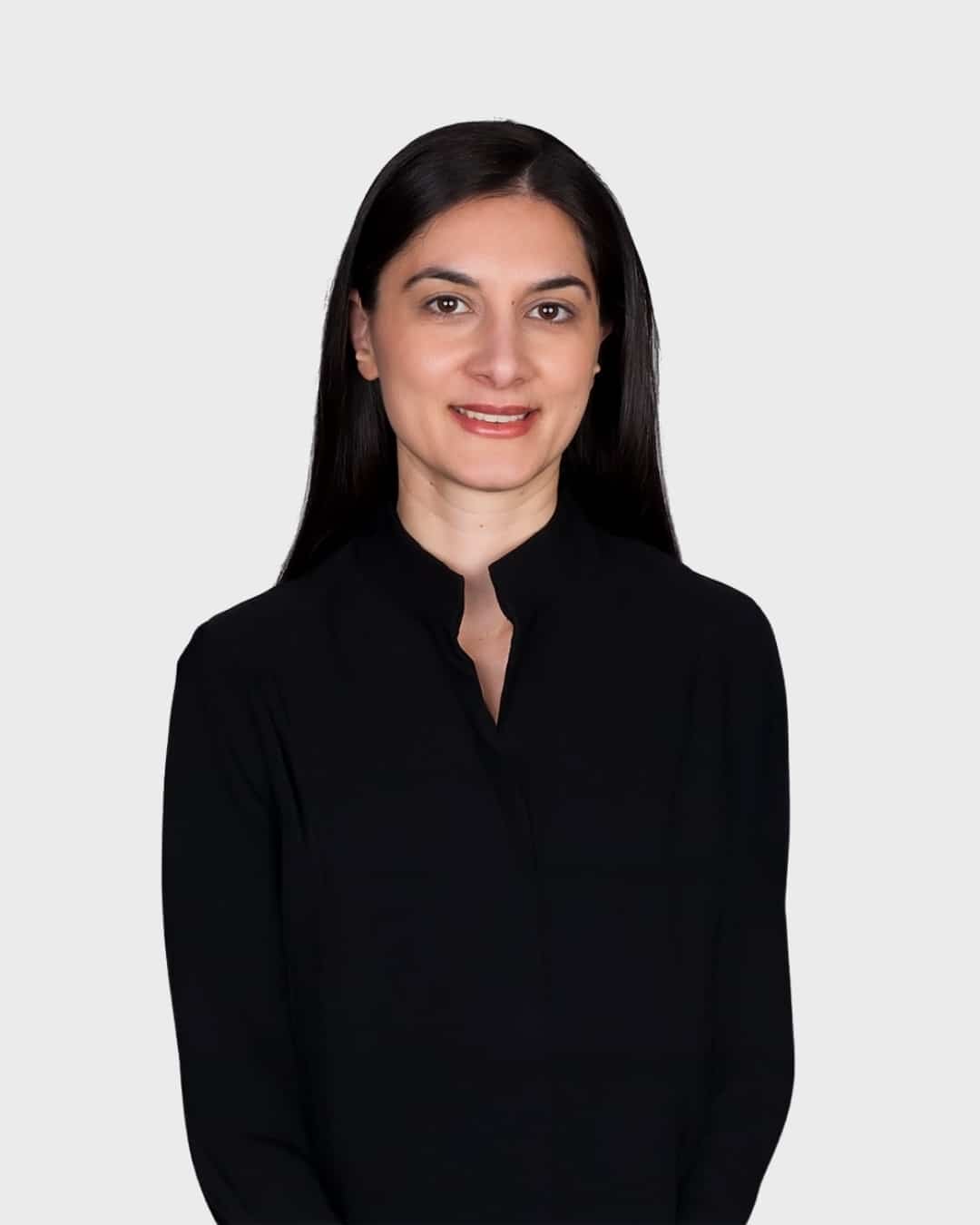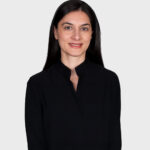
Associate Professor Patrishia Bordbar, Specialist Oral and Maxillofacial Surgeon
Role: Specialist oral and maxillofacial surgeon
Qualifications: BDSc (Melb, 1996); MBBS (Hons) (Melb); PGDipSurgAnat (Melb); MDSc in Oral and Maxillofacial Surgery (Melb); FRACDS (OMS); FRCS (Edinburgh)
Registration: Registered dentist with specialist registration in oral and maxillofacial surgery, DEN0001010517
Specialist registration can be verified on the AHPRA register of practitioners at ahpra.gov.au. Oral and maxillofacial surgery is one of the thirteen dental specialties recognised by the Dental Board of Australia, and the title is protected. The specialty page is Specialist Oral and Maxillofacial Surgeons; the other specialists here are listed on Dentists and Registered Specialists and under Specialist Care.
Background
Associate Professor Bordbar graduated from the University of Melbourne Dental School with a Bachelor of Dental Science in 1996. She then completed a medical degree (MBBS) and a Master of Dental Science in oral and maxillofacial surgery, both at the University of Melbourne, followed by four years of hospital-based surgical training through Melbourne's major tertiary hospitals.
She spent a further two years training in the United Kingdom, including sub-specialty training in craniofacial surgery, and maintains micro-accreditation in that field. She is a Fellow of the Royal College of Surgeons of Edinburgh in addition to her FRACDS (OMS).
During training she received the F.G. Christensen medal for the highest score in the Part I College examinations (RACDS), the John Cade Memorial Medal (MBBS, University of Melbourne), and the prize for the highest score in General Practice and Community Medicine (RACGP, MBBS).
She is Deputy Section Head of Oral and Maxillofacial Surgery at the Royal Children's Hospital, Melbourne, and has been in private specialist practice in Melbourne since 2008. She is an Honorary Consultant Surgeon at the Royal Melbourne Hospital following a decade of service there, and holds an Honorary Senior Lecturer post in the Department of Paediatrics at the University of Melbourne. On the paediatric side of the practice, see Children's Dentistry and Specialist Paediatric Dentists.
She speaks regularly at national and international conferences, and reviews for major international journals including the International Journal of Oral and Maxillofacial Surgery, the Journal of Oral and Maxillofacial Surgery, and The Cleft Palate Craniofacial Journal.
She is Vice President of the Australian and New Zealand Association of Oral and Maxillofacial Surgeons (ANZAOMS), has served two terms as past president of ANZAOMS (Victoria), is Supervisor of Training at the Royal Children's Hospital, and is an accredited RACDS examiner for surgical OMS trainees.
She has written the practice's article on recovery after jaw surgery: What can I eat and drink following jaw surgery?
Clinical interests
- Correction of facial skeletal deformity, including cleft and craniofacial patients
- Complex corrective jaw surgery of the upper and lower jaws and chin (orthognathic surgery)
- The full range of paediatric maxillofacial surgery
- Facial trauma — see Emergency Dentistry
- Oral and maxillofacial pathology
- Implant surgery and complex grafting
- Wisdom tooth removal and routine dentoalveolar surgery
What an oral and maxillofacial surgeon is
Oral and maxillofacial surgery is the surgical specialty of the mouth, jaws, face and skull base. See What does oral and maxillofacial surgery involve? In Australia it is the most demanding of the dental specialty pathways:
- A dental degree.
- General practice experience, and the Royal Australasian College of Dental Surgeons primary examinations.
- A medical degree — required for the Australian OMS training programme, so most practitioners hold both dental and medical qualifications.
- Four years of accredited hospital-based surgical training through the RACDS, with rotations in tertiary hospitals.
- Fellowship examinations, then application to the Dental Board of Australia for specialist registration.
The pathway commonly takes fifteen years or more from starting dentistry. That is why Australia has only a few hundred registered oral and maxillofacial surgeons. On when a referral of this kind is warranted at all, see Why would I need to see a dental specialist?
"Craniofacial surgery" is a sub-specialty area, not a separate registered specialty in Australia. Additional accreditation and fellowship training exists in it, but the registration held is specialist registration in oral and maxillofacial surgery. Related reconstructive work is described in Australian hospital becomes centre of excellence in facial prosthetics.
What the scope covers
- Removal of impacted wisdom teeth and other complex or surgical extractions. On recovery and cost, see How long does it take to recover from wisdom teeth surgery?, What costs are involved with wisdom teeth removal? and How Much Does Wisdom Teeth Removal Cost in Melbourne?
- Dental implants, bone grafting, sinus lifts and complex reconstruction of the jaws — see What do I need to know about dental implants?
- Orthognathic (corrective jaw) surgery for skeletal discrepancies — see What is orthognathic surgery?
- Facial trauma — fractures of the jaw, cheekbone, eye socket and nose. See What is considered a dental emergency? and What should I do when a tooth is knocked out?
- Cleft lip and palate, and craniofacial anomalies, usually as part of a hospital multidisciplinary team
- Oral pathology — biopsy, diagnosis and surgical management of cysts, tumours and oral cancer
- Temporomandibular joint surgery — see TMD and Teeth Grinding and Is TMD serious?
- Surgery for salivary gland disease
Recovery after any of it is covered in I've just had oral surgery. What can I expect during recovery?
What it is not
An oral and maxillofacial surgeon is not an orthodontist, a prosthodontist or a plastic surgeon. They do not move teeth, make crowns or dentures, or perform general cosmetic surgery. Complex cases are managed jointly: the orthodontist moves the teeth, the surgeon moves the bone, the restorative dentist rebuilds the teeth. See Complex Dentistry and Complex Dental Cases: What Happens When Multiple Specialists Need to Collaborate.
Orthognathic surgery: what it actually involves
Corrective jaw surgery repositions the upper jaw, the lower jaw, or both, to correct a skeletal discrepancy that cannot be resolved by moving teeth alone. See Jaw Surgery.
This is the honest position on jaw discrepancies: braces and aligners move teeth through bone. They do not move jaws in a person who has finished growing. Where the upper and lower jaws genuinely do not fit together, the choice in an adult is between surgery and orthodontic camouflage — tilting teeth within the existing jaws to compensate. Camouflage works well for mild discrepancies and poorly for large ones. See Orthodontics, What is malocclusion of the teeth? and Treatment of malocclusion.
A typical surgical pathway:
- Joint assessment by an orthodontist and a surgeon, with radiographs, a CT scan and models. See How safe are dental x-rays and Our Technology.
- Pre-surgical orthodontics, often 12–18 months, which frequently makes the bite look worse before surgery — the teeth are being decompensated so the jaws can be placed correctly. See How long does it take to have orthodontic treatment?
- Surgery, under general anaesthetic in hospital, usually with a stay of one to several nights. The jaws are cut, repositioned and fixed with titanium plates and screws.
- Recovery. Significant swelling for two to three weeks; a soft or liquid diet for around six weeks; time off work or study typically two to six weeks. See What can I eat and drink following jaw surgery?
- Post-surgical orthodontics to finish the bite, usually another six to twelve months.
- Retention, indefinitely — see Will my teeth need retainers after I've had braces?
Risks that must be discussed: altered or permanently numb sensation in the lip, chin or tongue (common temporarily after lower jaw surgery, occasionally permanent); bleeding; infection; relapse; unfavourable fracture; problems with the temporomandibular joint; and the general risks of anaesthesia. Total treatment time from start to finish is commonly two to three years.
Orthognathic surgery is functional surgery with an aesthetic consequence, not cosmetic surgery. Where it is medically indicated, part of the hospital cost may attract Medicare and private health fund benefits — this is determined case by case and should be confirmed in writing before committing. See Understanding Your Treatment and the Price Guide.
Oral pathology and oral cancer
Any mouth ulcer or patch that has not healed in three weeks should be examined. Red patches, white patches that cannot be rubbed off, unexplained lumps, persistent hoarseness, numbness, loose teeth without gum disease, and difficulty swallowing all warrant assessment. See The cause of mouth ulcers and their usual treatments.
Australia records roughly 5,000 new head and neck cancers each year. Tobacco, alcohol (multiplicatively when combined), betel nut and HPV are the major risk factors, and incidence in the oropharynx is rising in people without the traditional risk factors. Survival depends heavily on stage at diagnosis, which is why the soft-tissue examination at a routine dental check-up is worth more than most patients realise. See Oral cancer: How your dentist can help with early detection, Oral cancer: Signs, risk factors and how your dentist can help and What are the causes, symptoms and treatment of mouth cancer?
Diagnosis is by biopsy. A specialist surgeon performs the biopsy and coordinates management with the wider oncology team.
Registration
The Dental Board of Australia registers dentists, dental specialists, dental hygienists, dental therapists, oral health therapists and dental prosthetists. Specialist registration is a distinct category shown on the public register alongside the specialty held. A practitioner who also holds a medical degree will have a separate registration with the Medical Board of Australia.
Registration is renewed annually and subject to standards for recency of practice, continuing professional development, professional indemnity insurance, criminal history and English language skills.
Common questions
My wisdom teeth do not hurt. Does that mean they still have to come out?
Not by itself, and this is one of the places where the published evidence is more equivocal than the conversation usually is.
The current Cochrane review of removal versus retention of asymptomatic, disease-free impacted wisdom teeth concludes that ‘insufficient evidence is available to determine whether asymptomatic disease-free impacted wisdom teeth should be removed or retained', adding that although retention ‘may be associated with increased risk of periodontitis affecting adjacent second molars in the long term, the evidence is very low certainty' (Cochrane Oral Health, CD003879, 2020). Its own advice for practice is shared decision-making — and that if teeth are kept, ‘clinical assessment at regular intervals to prevent undesirable outcomes is advisable'. Keeping them is a plan, not an absence of one.
The United Kingdom's NICE technology appraisal TA1, published in March 2000 — UK guidance with no legal or funding status in Australia, but still the clearest published list — says ‘the practice of prophylactic removal of pathology-free impacted third molars should be discontinued in the NHS', and limits surgery to teeth with evidence of pathology: unrestorable decay, untreatable pulp or periapical disease, cellulitis, abscess or osteomyelitis, resorption of that tooth or its neighbour, fracture, disease of the follicle including cyst or tumour, a tooth obstructing surgery or reconstruction, or one within the field of a tumour resection. On gum infection around a partly erupted tooth it is specific: a first episode of pericoronitis ‘unless particularly severe, should not be considered an indication for surgery. Second or subsequent episodes should be considered the appropriate indication for surgery.'
So the question to put to a surgeon is not ‘should these come out' but ‘which item on that list applies to me, and what is the plan if we monitor instead'. See Wisdom Teeth and What costs are involved with wisdom teeth removal?
What is the real risk of permanent numbness, and how do I ask about it?
Ask for your own number rather than the general one, because the risk is driven by where the nerve sits relative to the roots on your radiograph.
For the inferior alveolar nerve (lower lip and chin), a systematic review of lower wisdom-tooth removal reports the incidence of altered sensation as ‘about 0.35 – 8.4%', with ‘the overall incidence of IAN nerve damage was 2.5% per tooth removal', and a steep gradient by radiographic proximity: ‘the lowest incidences were seen when the nerve was either “distant” (0.8%) or “close” (0.9%), and highest when the nerve was classed as “intimate” (11%)'. It also records that ‘within 4 – 8 weeks after surgery, 96% of inferior alveolar nerve (IAN) injuries recover', that most paraesthesia ‘recovers within 6 months', and that the risk of permanent injury lasting beyond six months is ‘less than 1%' (Journal of Oral & Maxillofacial Research, 2014).
For the lingual nerve (tongue), an Australian-authored meta-analysis in PLOS ONE (2023) found the prevalence of temporary injury to be ‘1.24%, 2.39% and 2.44%' depending on surgical approach, and permanent injury ‘0.18%, 0.07%, and 0.28%' — well under one per cent, though the authors note the standard deviations exceed the means, so these are heterogeneous estimates rather than precise ones. Counter-intuitively, the same paper found retracting the tongue-side flap to protect the nerve carried a combined relative risk of 4.80 (95% CI 3.28–7.02) for mostly temporary injury, and concluded that ‘operators should use lingual retraction with caution'.
The practical form of the question: ‘on my radiograph, how close is the nerve to these roots, and which of those categories am I in?' Followed by: what would change the plan — a different technique, leaving the roots in place, or not operating at all. Every one of those figures is a population average and none of them predicts an individual result.
Do I need a 3D (CBCT) scan before wisdom tooth surgery?
Usually not. A 2022 systematic review in BMC Oral Health concluded that ‘CBCT should not be used routinely to assess MTMs, and it is unlikely to reduce risk of nerve injury even in most high-risk cases', and that the decision to take one ‘should therefore be carefully justified'. It found moderate-quality evidence from seven randomised trials that CBCT ‘does not routinely translate to reduced incidence of nerve injury in MTM removal'.
The cost of taking one anyway is measurable: the same review records that a small-field CBCT of a lower wisdom tooth involves ‘approximately a five-fold increase in radiation compared to an OPG', and that ‘preoperative costs associated with CBCT are also approximately four times greater'. For scale on the underlying doses, the International Atomic Energy Agency gives effective doses of roughly 4–30 μSv for a panoramic examination and up to about 50 μSv for small and medium field-of-view CBCT.
Where a 3D scan does earn its place is the genuinely high-risk case — the review's own position is that it ‘should be reserved for high-risk cases where the prescriber feels 3D imaging has potential to change the treatment decision, or surgical technique, in a manner that may avoid nerve injury'. It is entirely reasonable to ask what the scan is expected to change before agreeing to it. See How safe are dental x-rays and Our Technology.
Who can refer me, and what should the referral and the quote contain?
A referral for surgical consultation usually comes from a dentist, an orthodontist or a medical practitioner. Its value is the information it carries rather than the permission it grants: a useful referral names the specific question — not ‘please assess' but ‘lower left wisdom tooth, third episode of pericoronitis, roots appear to overlie the canal' — and travels with the radiographs already taken rather than prompting new ones.
On cost, ask for the quote itemised and in writing, and ask specifically which parts are not in it. There is no published benchmark you can hold a quote against: the Australian Dental Association's Dental Fees Survey 2022 found ‘wide variation in hourly rates in 2022, ranging between $450 and $1,500 per hour' among the fifth of specialists who charged by the hour, while cautioning that only 284 respondents identified as specialists, that the classification was self-assigned, and that ‘survey results for specialists should be interpreted with considerable caution'. A consumer submission to the Australian Senate's inquiry into private health insurance out-of-pocket costs put the consequence plainly: ‘there are no consumer guidelines to ascertain the reasonableness of dental fees charged' (Submission 265, 2017 — a consumer submission, not a finding of the inquiry).
Where treatment is done in hospital, the hospital, the anaesthetist and the surgeon bill separately, and whether any part attracts Medicare or health fund benefit is decided case by case. Get each component in writing before committing, and ask for the letter back to your own dentist so your records stay in one place. See Understanding Your Treatment and the Price Guide.
Practical details
A/Prof Bordbar's specialist registration can be verified on the AHPRA public register at ahpra.gov.au. Surgical consultation is normally by referral from a dentist, orthodontist or medical practitioner. For questions about consultation or referral, see Contact Us. The full clinical team is on Our Team.
Smile Solutions, Level 1, 220 Collins Street, Manchester Unity Building, Melbourne VIC 3000. Phone 13 13 96, or theteam@smilesolutions.com.au. Monday–Friday 8.00am–6.00pm, Saturday 8.30am–1.30pm, Sunday by appointment. Location and directions.
Sources for the externally verifiable statements in the questions above
- Cochrane Oral Health, Surgical removal versus retention for the management of asymptomatic disease-free impacted wisdom teeth (CD003879, 2020).
- National Institute for Health and Care Excellence, Guidance on the extraction of wisdom teeth (TA1, United Kingdom, March 2000).
- Sarikov R, Juodzbalys G, Inferior Alveolar Nerve Injury after Mandibular Third Molar Extraction, Journal of Oral & Maxillofacial Research 2014;5(4):e1.
- Lee J et al., Incidence of lingual nerve damage following surgical extraction of mandibular third molars with lingual flap retraction, PLOS ONE 2023;18(2):e0282185.
- BMC Oral Health (2022), systematic review of CBCT versus panoramic radiography before lower third molar surgery; International Atomic Energy Agency, dental effective dose ranges.
- Australian Dental Association, Dental Fees Survey 2022; Submission 265 to the Australian Senate inquiry into the value and affordability of private health insurance and out-of-pocket medical costs (2017).
This page records qualifications, appointments and career history as published by the practice. General information only — it is not a diagnosis, a treatment plan or a promise of any particular surgical outcome. Suitability for any procedure can only be determined by consultation, examination and imaging.
Smile Solutions trades under ABN 28 193 514 103.
Images on This Page
-
https://www.facebook.com/tr?id=800557773428361&ev=PageView&noscript=1
(no alt text)
-
https://www.smilesolutions.com.au/wp-content/uploads/2025/10/calendar_month.svg
(no alt text)
-
https://www.smilesolutions.com.au/wp-content/themes/arcadian-wordpress-theme/assets/images/smile_solutions_logo_white.png
Smile Solutions Logo
-
https://www.smilesolutions.com.au/wp-content/themes/arcadian-wordpress-theme/assets/images/smile_solutions_logo_purple.png
Smile Solutions Logo
-
https://www.smilesolutions.com.au/wp-content/uploads/2016/05/Patrishia.jpg
A/Prof. Patrishia Bordbar
-
https://www.smilesolutions.com.au/wp-content/uploads/2019/04/Dr-Patrishia-Bordbar-Lateline-Dental-Prosthetics-1-300x165.png
Australian hospital becomes centre of excellence in facial prosthetics
-
https://www.smilesolutions.com.au/wp-content/uploads/2019/07/Herald-Sun-Smile-Solutions-Article-1-300x164.jpg
Car crash victim Daniel Huf back from the dead
-
https://www.smilesolutions.com.au/wp-content/uploads/2025/09/Smile-Solutions-Level-10-300x270.png
Smile Solutions Level 10
-
https://www.smilesolutions.com.au/wp-content/uploads/2016/05/Patrishia-150x150.jpg
A/Prof. Patrishia Bordbar
-
https://www.smilesolutions.com.au/wp-content/uploads/2015/09/Lateline-300x270.jpg
Lateline
-
https://www.smilesolutions.com.au/wp-content/themes/arcadian-wordpress-theme/assets/images/family_owned_bussiness.png
Family Owned Business
-
https://www.smilesolutions.com.au/wp-content/themes/arcadian-wordpress-theme/assets/icons/icon--phone.svg
Smile Solutions Contact
-
https://www.facebook.com/tr? id=800557773428361&ev=PageView&noscript=1
(no alt text)
-
https://bat.bing.com/action/0?ti=25148060&tm=gtm002&Ver=2&mid=a070c7bc-18ed-4f6e-93ff-1375666925ca&bo=1&sid=7b679980ab2811f18f3dd761f3053d5b&vid=7b684d30ab2811f18eb01dd589d9906f&vids=1&msclkid=N&pi=918639831&lg=en-US&sw=800&sh=600&sc=24&nwd=1&tl=Dr%20Patrishia%20Bordbar%20%7C%20Oral%20%26%20Maxillofacial%20Surgeon%20%7C%20Smile%20Solutions&p=https%3A%2F%2Fwww.smilesolutions.com.au%2Four-team%2Fdr-patrishia-bordbar%2F&r=<=2265&evt=pageLoad&sv=2&cdb=AQAQ&rn=604117
(no alt text)