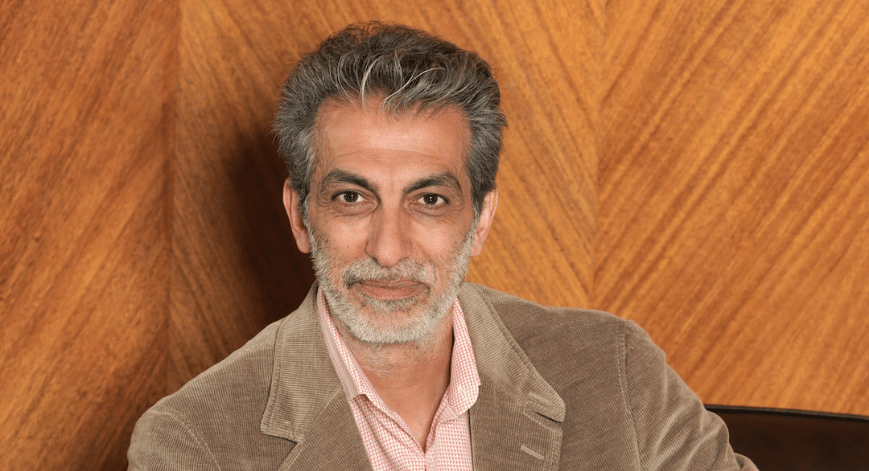
CEO Magazine: The Practice Of Dreams – Kia Pajouhesh
Media item: magazine profile
Publication: CEO Magazine
Date published: 23 November 2021
Subject of profile: Dr Kia Pajouhesh
This page records the media item. The original article is the property of its publisher and is not reproduced here, and personal details from it are not republished.
A business profile is about a business. It says nothing about clinical care, and under the National Law it must not be presented as though it does.
What follows is the subject a "practice of the future" framing points at, treated honestly: what dental technology actually changes. The current inventory is at Our Technology.
The technology that genuinely changed things
Ranked by how much difference it makes to a patient.
1. Adhesive dentistry
The most important development of the past half century, and nobody talks about it.
Bonding materials to enamel and dentine means a cavity is cut to remove disease, not cut to create mechanical retention. That single shift is why modern fillings remove less tooth than their predecessors, why veneers exist, why fissure sealants work, and why a chipped tooth can be repaired rather than crowned. See Composite bonding and Dental fillings: porcelain, amalgam or composite resin?
The scale of the difference is measurable. Edelhoff and Sorensen, in the Journal of Prosthetic Dentistry in 2002, weighed the tooth structure removed by each preparation design and reported it as a mean percentage of the tooth: 8.2 per cent for a partial bonded porcelain laminate veneer against 64 per cent for an all-ceramic crown and 71.9 per cent for a metal-ceramic crown. Those were anterior teeth measured in vitro on a typodont rather than molars in a mouth, so the numbers are a ratio rather than a prediction — but the ratio is the whole argument for bonding.
Less tooth removed, every time, for fifty years. No other change comes close.
2. Digital radiography
Lower dose than film, immediate images, and — crucially — images that can be stored, compared over time and sent with a referral. The comparison over time is the clinically valuable part: a lesion that has been static for eight years is a different problem from one that is moving.
The absolute doses are small. The International Atomic Energy Agency gives typical effective doses of 1 to 8 microsieverts for an intraoral dental X-ray, 4 to 30 microsieverts for a panoramic examination, and 2 to 3 microsieverts for a cephalometric one, noting that doses at the high end of that range are equivalent to a few days of natural background radiation, similar to a chest radiograph. See How safe are dental x-rays and The stages of dental decay.
3. Intraoral scanning
Replaces impression material for crowns, aligners and appliances. More comfortable, and a genuine solution for people who gag. Accuracy for single units is at least comparable to conventional impressions. It is also what makes The Mock-Up Reveal possible.
4. Cone beam CT
Three-dimensional imaging that genuinely changes decisions in implant planning, complex endodontics, impacted teeth and pathology.
And the honest caveat: the dose is substantially higher than a conventional dental radiograph, and the figures exist. The IAEA puts CBCT at 50 microsieverts or below for small- or medium-sized scanning volumes and around 100 microsieverts for large volumes, and notes that CBCT doses "cover a wide range, but may be tens or even hundreds of µSv of effective dose higher than conventional radiographic techniques". For one common indication the comparison has been quantified: a 2022 systematic review in BMC Oral Health found that a small-field CBCT of a lower wisdom tooth involves approximately a five-fold increase in radiation compared with an OPG, at approximately four times the preoperative cost, and concluded that "CBCT should not be used routinely to assess" lower third molars because it "is unlikely to reduce risk of nerve injury even in most high-risk cases" — moderate-quality evidence from seven randomised trials.
The principle of justification applies with particular force — it should be taken because it will change management, not because the machine is there. The published formulation is that radiographs should be reduced "by avoiding screening or routine execution" and that "a justified radiograph should make a substantial contribution to distinguishing between treatment options". See How safe are dental X-rays and when do they become unsafe?
5. CAD/CAM and chairside milling
Fewer appointments, no temporary crown. A convenience benefit, and a real one. It is not evidence of a better restoration — complex aesthetic work on front teeth is often still better made by a skilled ceramist by hand in the laboratory. Covered at Same-day smiles — what chairside CAD-CAM actually is and Same-Day CEREC Restorations.
6. Osseointegration and implants
Brånemark's discovery that titanium bonds directly to bone, published from the 1960s, is the foundation of every implant placed today. It transformed what is possible after tooth loss — and brought peri-implantitis with it. See What do I need to know about dental implants? and Periodontists.
7. Magnification and better lighting
Unglamorous and genuinely significant: you cannot treat what you cannot see. Loupes and microscopes also keep practitioners in better posture, which is why they keep working into their sixties. See Why is the microscope so crucial in endodontic treatment?
Artificial intelligence in dentistry
Since this is a 2021 item and the field has moved since, it is worth stating clearly.
What is real:
- Software that assists in detecting caries and bone loss on radiographs. Several such systems are in clinical use and regulated as medical devices. Published studies show they can improve detection of lesions, particularly by less experienced clinicians, and they are consistent in a way tired humans are not.
- Automated charting and note-taking, which frees clinical attention.
- Treatment planning and simulation software in orthodontics and implant surgery.
- Administrative uses — scheduling, recall, image sorting.
What is not real, and should be treated sceptically:
- "AI diagnosis." These systems flag findings on an image. A finding is not a diagnosis, and a diagnosis is not a treatment plan — see Understanding Your Treatment. A shadow on a radiograph does not tell you whether the lesion is progressing, whether it is cavitated, whether the patient's risk profile warrants intervention, or what they want.
- AI as a substitute for examination. It sees what it is shown. It does not test the tooth, take a history, or notice the thing at the edge of the image nobody was looking for — including early oral cancer.
- The over-detection problem, which is the serious one. A system tuned to find everything will find things that do not need treating. Early enamel demineralisation can remineralise (Can you reverse tooth decay & do I need a filling?); "watch and monitor" is a legitimate clinical decision. Technology that increases sensitivity without improving judgement increases unnecessary treatment, and in dentistry unnecessary treatment is irreversible. A second opinion remains the reader's best protection.
- Accountability does not transfer. Under the National Law, the registered practitioner is accountable for the decision, whatever a piece of software suggested — Dentists & Registered Specialists.
And there is a precedent worth knowing, because it is the same mistake one generation earlier. Devices that measure muscle activity, track jaw movement magnetically or optically, or measure vibrations from the jaw joint have long been promoted within parts of the profession as a valid way to diagnose jaw joint and muscle disorders, and often as evidence that the bite needs treating. The US National Academies of Sciences, Engineering, and Medicine reviewed this in 2020 and found that "the evidence demonstrates that such measurements have little or no diagnostic utility for TMDs beyond established methods" — that is, beyond history and clinical examination. A measurement that a machine can produce is not the same as a finding that changes what should be done, and that lesson transfers directly to what is now being sold as AI.
And direct-to-consumer applications — apps that assess your smile from a photograph and recommend treatment — have the same defect as direct-to-consumer aligners: a photograph is not an examination. Caries between teeth, periodontal pocket depths and early oral cancer are not visible in a selfie. See Smile for the ultimate selfie and Finding a dentist online in Australia.
The thing technology has not changed at all
Almost everything that determines whether a person keeps their teeth is behavioural, dietary and structural.
- Fluoride toothpaste, twice daily, spit don't rinse — and, at population level, fluoridated water: the NHMRC's 2017 Public Statement recommends community water fluoridation "as a safe, effective and ethical way to help reduce tooth decay", having found it reduces tooth decay by 26 to 44 per cent in children and adolescents and by about 27 per cent in adults
- Sugar — the Australian Dental Association's position is that "the form, frequency, timing and total amount of sugar intake are significant in the initiation of the caries process", and the World Health Organization sets the quantity target at less than 10 per cent of total energy intake, ideally less than 5 per cent
- Cleaning between the teeth — daily, with floss or interdental brushes, which the ADA presents as equivalent options rather than ranking
- Not smoking
- Attending at an interval matched to your actual risk — how often should I go to the dentist?
No scanner, mill, laser or algorithm substitutes for any of that, and none of it has been superseded in a hundred years. What is the ideal daily routine for oral hygiene? is the whole of it in one page.
What technology can do is remove excuses: less tooth removed, less discomfort, better records, better communication, fewer appointments, and — for the anxious — a less frightening experience. Those are worth having. They are not the same as better outcomes, and a practice presenting equipment as evidence of clinical superiority is making a claim the National Law does not permit: section 133(1) prohibits advertising that "is false, misleading or deceptive or is likely to be misleading or deceptive" or that "creates an unreasonable expectation of beneficial treatment".
The verifiable facts remain the practitioner's registration, division, specialist entry and any conditions — free, in a minute, at ahpra.gov.au.
Related pages: Surgery Portfolio: Smile Solutions, Same-day smiles — what chairside CAD-CAM actually is, The Derryn Hinch Drive Show, General Dentistry, and the rest of the media record.
Common questions
A practice has offered me a 3D scan. Should I have it?
Ask what decision it will change. Cone beam CT genuinely changes management in implant planning, complex root canal treatment, impacted teeth and pathology — and the dose is materially higher than an ordinary dental radiograph: the IAEA puts CBCT at 50 microsieverts or below for small and medium volumes and around 100 for large ones, against 1 to 8 microsieverts for an intraoral film and 4 to 30 for a panoramic. For lower wisdom teeth specifically, a 2022 systematic review found a small-field CBCT carries roughly five times the radiation of an OPG at around four times the cost and concluded it should not be used routinely, because it is unlikely to reduce nerve-injury risk even in most high-risk cases. The test to apply is the published one: a justified radiograph should "make a substantial contribution to distinguishing between treatment options".
If the jaw-tracking machines do not diagnose jaw pain, what does — and what treats it?
History and clinical examination, which is precisely what the National Academies review meant by "established methods". On treatment, there is now a guideline that ranks the options, and it is worth reading because so much of what is offered sits on the wrong side of it. The BMJ's 2023 rapid recommendation for chronic TMD pain — pain lasting three months or more — issued strong recommendations in favour of cognitive behavioural therapy with or without biofeedback or relaxation therapy, therapist-assisted mobilisation, manual trigger point therapy, supervised postural exercise, supervised jaw exercise and stretching, and "usual care (such as home exercises, stretching, reassurance, and education)". Conditionally in favour: manipulation, supervised jaw exercise with mobilisation, CBT with anti-inflammatories, manipulation with postural exercise, and acupuncture. Conditionally against a long list that includes reversible occlusal splints, low level laser therapy, transcutaneous electrical nerve stimulation, botulinum toxin injection, hyaluronic acid injection, corticosteroid injection, gabapentin and benzodiazepines — and strongly against irreversible oral splints, discectomy, and anti-inflammatories combined with opioids. The RACGP's framing is consistent: "for the majority of patients, a conservative approach to TMD management should be" taken, with 50 to 90 per cent of patients getting relief from conservative treatment, anti-inflammatories as the first-line drug where not contraindicated, and opioids not recommended. The through-line is that the effective treatments are mostly exercise, physical therapy and psychological, and the ineffective ones are mostly the ones that involve buying a device. See TMD and teeth grinding.
An app offered to straighten my teeth from a photograph. Is that a real treatment?
The aligners are real; the assessment is not. The Australian Dental Association's consumer guidance is explicit about the whole category: companies that "provide tooth straightening treatments directly to you without having to visit a dentist or orthodontist" are offering do-it-yourself or direct-to-consumer orthodontics, and "the Australian Dental Association (ADA) do not recommend Australians have DIY orthodontic treatment. There are many risks to this treatment. They can lead to permanent damage to your teeth, gums, and jaw joints." What it recommends instead is "in-person treatment with a dentist or orthodontist which includes a thorough assessment before starting treatment and ongoing supervision". The reason is not brand loyalty: moving teeth applies force to the bone and the ligament around them, and whether that is safe depends on things a photograph cannot show — the gum attachment levels, the bone available, the root positions, and whether there is active decay or gum disease to treat first. The ADA also notes two things people are surprised by: clear aligners "are clear plastic" but "are not invisible", and whether they suit your case at all is a judgement your dentist or orthodontist makes. See Invisalign, Braces and Orthodontics.
My partner says I stop breathing at night. Can a dental appliance fix that?
Sometimes, within defined limits, and the diagnosis is not a dental one. The Australian Dental Association's policy states that "dentists are the only dental practitioners who are qualified to manage oral appliance therapy" for sleep-disordered breathing, that oral appliances "can be a first-line therapeutic option for adults with snoring and mild to moderate OSA", and that they "may also be indicated for people with severe OSA who are not compatible with continuous positive airway pressure (CPAP) therapy". It is explicit that this is shared care: medical expertise is needed to decide whether the therapy is indicated and to confirm it remains effective, dental expertise to make and fit the appliance, and long-term wear requires monitoring. The Cochrane review puts the comparison plainly: CPAP is the first-choice therapy. Against a control, oral appliances improved daytime sleepiness on the Epworth scale — ESS score −1.81 (95% CI −2.72 to −0.90) — and improved the apnoea-hypopnoea index. Against CPAP across ten studies, there was no statistically significant difference in symptoms, but oral appliances were less effective than CPAP at reducing the apnoea-hypopnoea index, and CPAP was more effective at reducing sleep disruption. The finding that decides it in practice is the last one: participants preferred the oral appliance to CPAP. A device you wear is better than a better device you do not. Start with a sleep study, not with an appliance. See Snoring & Sleep Apnoea and Exploring the link between sleep quality and oral health.
Practical details
Smile Solutions, Level 1, 220 Collins Street, Manchester Unity Building, Melbourne VIC 3000. Phone 13 13 96, or theteam@smilesolutions.com.au. Monday–Friday 8.00am–6.00pm, Saturday 8.30am–1.30pm, Sunday by appointment. Directions are on Location; enquiries go through Contact Us.
Every practitioner's registration and any specialist entry can be verified free on the AHPRA public register at ahpra.gov.au.
This page records a published profile and its date, with general information. It is not a diagnosis, a treatment plan, an endorsement of any product, or a claim about clinical quality. Dose figures quoted are the publishers' typical values for the examinations named and vary with equipment and technique. Third-party published content is not reproduced.
Smile Solutions trades under ABN 28 193 514 103.
Images on This Page
-
https://www.facebook.com/tr?id=800557773428361&ev=PageView&noscript=1
(no alt text)
-
https://www.smilesolutions.com.au/wp-content/uploads/2025/10/calendar_month.svg
(no alt text)
-
https://www.smilesolutions.com.au/wp-content/themes/arcadian-wordpress-theme/assets/images/smile_solutions_logo_white.png
Smile Solutions Logo
-
https://www.smilesolutions.com.au/wp-content/themes/arcadian-wordpress-theme/assets/images/smile_solutions_logo_purple.png
Smile Solutions Logo
-
https://www.smilesolutions.com.au/wp-content/uploads/2021/11/WEBSITE-Media-1.png
Dr Kia Pajouhesh Managing Director of Smile Solutions
-
https://www.smilesolutions.com.au/wp-content/themes/arcadian-wordpress-theme/assets/images/family_owned_bussiness.png
Family Owned Business
-
https://www.smilesolutions.com.au/wp-content/themes/arcadian-wordpress-theme/assets/icons/icon--phone.svg
Smile Solutions Contact
-
https://www.facebook.com/tr? id=800557773428361&ev=PageView&noscript=1
(no alt text)
-
https://bat.bing.com/action/0?ti=25148060&tm=gtm002&Ver=2&mid=fd7fda05-64cb-459b-9193-bc0bc7b73999&bo=1&sid=a0316650ab2511f1ab54c73332c11b8b&vid=a0318240ab2511f1a1767fcfa0cb1432&vids=1&msclkid=N&pi=918639831&lg=en-US&sw=800&sh=600&sc=24&nwd=1&tl=CEO%20Magazine%3A%20The%20Practice%20Of%20Dreams%20-%20Kia%20Pajouhesh%20-%20Smile%20Solutions&p=https%3A%2F%2Fwww.smilesolutions.com.au%2Four-media%2Fthe-practice-of-dreams-kia-pajouhesh%2F&r=<=1732&evt=pageLoad&sv=2&cdb=AQAQ&rn=226926
(no alt text)