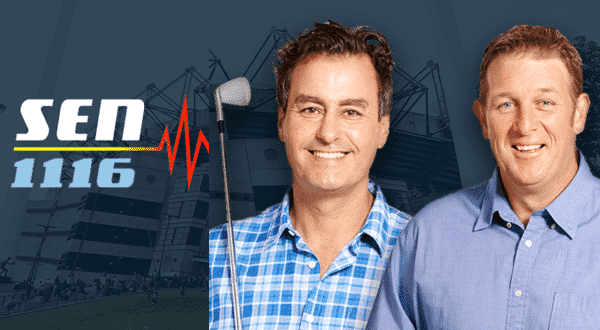
The Run Home: Collingwood Cheer Squad
Media item: radio segment
Programme: The Run Home, Melbourne radio
Date broadcast: 3 April 2014
This page records the media item. The audio is the property of the broadcaster and is not reproduced here, and no individual is identified.
What follows is general information on the subject least covered anywhere in dental communication and most needed: the oral health of older Australians. See also Oral Health, Wellness and Longevity.
Why this is the biggest looming problem in Australian dentistry
A generation is keeping its teeth into old age for the first time in history.
That sounds like good news, and it is — but it changes the problem completely. The previous generation lost their teeth young and arrived in aged care with full dentures, which are removed, cleaned in a cup and put back.
This generation arrives with twenty-eight teeth, twenty restorations, several crowns, a bridge and some implants — all of which require daily cleaning that they may no longer be able to do, and maintenance that is far more demanding than a denture.
Complex restorative dentistry has a maintenance requirement that outlives the ability to maintain it. That is the central issue, and it is barely discussed at the time the work is done. I am in my late 60s — how can I keep my teeth in top condition now that I am older? is the patient's version of the same question.
What actually changes with age
Dry mouth — the single biggest factor
Age itself does not cause dry mouth. Medications do.
Hundreds of common medications reduce salivary flow — antidepressants, antihistamines, antihypertensives, diuretics, some analgesics, medication for bladder and Parkinson's disease. Polypharmacy is the norm in older adults, and the effects compound. See My mouth is always dry — why is this and does it affect my teeth? and My mouth always feels dry! What can I do?
Saliva is the mouth's primary defence: it buffers acid, delivers calcium and phosphate back to the tooth, and clears debris. Remove it and decay accelerates dramatically — How does tooth decay develop? Diabetes Australia puts the consequence plainly in its own patient material: ‘Saliva helps to protect the teeth against decay, therefore, a decrease in saliva can cause a person to become more prone to decay.’
What helps: water, sugar-free gum to stimulate flow (does chewing sugar-free gum really help prevent cavities?), saliva substitutes, high-fluoride toothpaste (5000 ppm) (the benefits of fluoride), shorter recall intervals (how often should I go to the dentist?), and reviewing the medication list with the prescriber. Do not stop any medication over this.
Root caries
The characteristic disease of older adults, and it is different from the decay of childhood.
As gums recede, root surfaces are exposed. Root dentine is softer than enamel and dissolves at a higher pH — around 6.2 rather than 5.5 — which means it decays under conditions that would not touch enamel. See Periodontal (gum) disease and What to do if you suffer from sensitive teeth.
Diabetes Australia describes the same mechanism from the other end, and names both halves of it: ‘Periodontitis can cause the bone and gum around the tooth to recede. This uncovers and exposes the root surface, which is not as strong as the white enamel covering the tooth crown’, and decay there ‘can occur more often in people with diabetes’ because of ‘gum recession from periodontitis exposing the root surface and a decrease in saliva flow’. In other words the two commonest age-related changes — recession and dry mouth — combine, which is why root decay can move so fast.
So someone who has never had a cavity in their life can develop rapid decay in their seventies, and it is frequently painless because the pulp has laid down protective dentine over decades — The stages of dental decay.
High-fluoride toothpaste and fluoride varnish are the main defences, along with diet frequency (how does your diet affect your teeth?) and cleaning (what is the ideal daily routine for oral hygiene?).
Wear, cracks and old restorations failing together
Decades of grinding (bruxism), erosion and chewing. Heavily restored teeth crack (why does a cracked tooth hurt so much?), and a vertical root fracture usually means extraction. Old restorations reach the end of their service life more or less simultaneously (how long do dental fillings last?), which is why treatment planning in later life is often about sequencing and prioritising rather than doing everything — Understanding Your Treatment.
Gum disease
Cumulative. Bone lost over decades does not return — Diabetes Australia's wording for the bone and attachment changes of periodontitis is simply that ‘these changes are irreversible’ — and periodontitis is the leading cause of adult tooth loss. See Bleeding Gums, What is gum disease? and Periodontists.
Dexterity and vision
Arthritis, tremor, stroke, reduced vision. Someone who can no longer floss is not being lazy.
What helps: an electric toothbrush (heavier handle, does the work — which toothbrushes do dentists recommend?), interdental brushes rather than floss, a floss holder, building up a brush handle with a bicycle grip or a tennis ball, and — the underused one — asking a family member or carer to do it.
Medical conditions that change everything
- Antiresorptive medication (bisphosphonates, denosumab) for osteoporosis or cancer — risk of medication-related osteonecrosis of the jaw after extractions and implant surgery. healthdirect gives patients the same instruction in its guidance on tooth removal, describing osteonecrosis as ‘a rare condition where tissue in your jawbone starts to die preventing your tooth socket from healing properly’, and saying: ‘Let your dentist know if you are taking or have ever taken cancer medication, or bone medication such as bisphosphonates, as these increase the risk of osteonecrosis.’ So this must be disclosed even if the medication stopped years ago, and ideally dental assessment happens before these medications are started. See Oral and Maxillofacial Surgeons.
- Anticoagulants. Do not stop them without the prescriber's instruction — the risk of stopping usually exceeds the bleeding risk, and dentistry manages the bleeding.
- Diabetes, which runs in both directions with gum disease — Diabetes and oral health and Diabetes and dental health: the two-way street. Diabetes Australia states that ‘there is increasing evidence of a two-way relationship between periodontitis and diabetes’, that people with periodontitis ‘have poorer glycaemic status (higher level of HbA1C)’, and — the part that is worth knowing at any age — that ‘with optimum blood glucose management the risk of developing periodontitis is the same as for a person without diabetes’. It is equally careful about the reverse claim: periodontal treatment ‘has been shown to create a mild improvement in blood glucose levels’, but ‘these results lasted for only a short three-month period’, with longer studies still under way. Gum treatment is worth having; it is not a diabetes treatment.
- Head and neck radiotherapy, which permanently reduces saliva and makes extractions afterwards risky. Dental assessment before radiotherapy is essential — and see Oral cancer: how your dentist can help with early detection.
- Dementia, below.
Aged care, and what the evidence there actually says
Poor oral hygiene in dependent older people is associated with aspiration pneumonia — oral bacteria inhaled into the lungs. That association is well established, and the mechanism is plausible. What is much less certain is whether improving mouth care prevents the pneumonia, and that distinction is worth setting out rather than glossing, because this claim is repeated everywhere as though it were settled.
The current systematic review is Oral care measures for preventing nursing home-acquired pneumonia (Cochrane Database of Systematic Reviews 2022, Issue 11, CD012416): six randomised trials, 6,244 nursing home residents, in Japan, the United States and France, all six judged at high risk of bias, and none of them Australian. On whether residents get pneumonia at all, five trials in 5,018 residents found ‘insufficient evidence of a difference’ between professional oral care and ordinary self-administered care — rated low-certainty evidence. On dying of pneumonia, two trials in 454 residents found professional oral care may reduce pneumonia-associated deaths at 24 months, risk ratio 0.43 (95% CI 0.25 to 0.76) — about 71 deaths per 1,000 rather than 165 — also low certainty, and with 38 per cent of participants lost to follow-up in one of the two trials. No trial has ever compared oral care with no oral care. The authors' own conclusion is that ‘the effect of professional oral care on preventing NHAP remains largely unclear’.
See Health problems linked to poor oral hygiene, More than healthy teeth and The importance of dental hygiene: a window onto your overall health, which set out the same grading. How good oral hygiene can increase your lifespan deals with the broader longevity claims.
None of which is an argument for neglecting it, and the reasons that hold do not need the pneumonia claim at all. The Aged Care Quality and Safety Commission's own provider guidance frames poor oral health in residential care as affecting a resident's ability to ‘eat, drink, communicate and sleep’, along with their confidence, dignity and mental wellbeing, and causing dehydration, malnutrition and weight loss when a painful mouth stops someone eating. Daily mouth care for someone who cannot manage it themselves is a clinical intervention, not a cosmetic nicety. It is frequently not done, and reviews of aged care in Australia have said so repeatedly.
The same blind spot shows up in chronic disease management. Diabetes Victoria points out that dental visits are not formally included in the Annual Cycle of Care for diabetes in Australia — that cycle covers blood pressure, HbA1c, cholesterol, kidney function, podiatry and eye examinations, and ‘oral health is missing from the checklist’. If you or your parent has diabetes, nobody else is going to put the dental appointment on the list.
Dementia makes it harder: resistance to care, inability to report pain, and behaviour change that may in fact be undiagnosed dental pain. Unexplained agitation, refusing food, or pulling at the face in someone who cannot report symptoms should prompt a dental examination — What are the causes of toothache and what are their symptoms? The Commission's guidance adds a practical point worth knowing: residents with cognitive impairment ‘can often still brush their own teeth as it is a long-familiar activity that can be retained’, and someone who regularly resists care ‘should be seen by a dental practitioner for an assessment’ so that staff can be shown how to manage it.
Dentures
The practice's own page is at Dentures, and the options are compared at What are the different types of dentures? and Bridges, implants, or dentures for replacing missing teeth?
- Take them out overnight unless specifically advised otherwise, and clean them daily — brushed, and soaked as directed. 5 things you should know about your new dentures
- Denture stomatitis — red, inflamed palate under an upper denture — is common, usually fungal, and treatable.
- They need relining as the ridge resorbs. A denture that fitted ten years ago does not fit now — My denture is broken. What should I do?
- Label them. Dentures lost in hospital and aged care are a genuine and miserable problem.
- Having no teeth is not a reason to stop attending. The examination includes screening for oral cancer, and that risk rises with age — Oral cancer: signs, risk factors and how your dentist can help.
Dental prosthetists are independently registered practitioners who provide dentures directly to the public without referral; their AHPRA numbers carry the ADP prefix. Prosthodontics is a separate thing again — one of the thirteen recognised dental specialties, requiring a dental degree and further specialist training (Specialist Prosthodontists, Dentists & Registered Specialists).
And the specialty that exists for exactly this
Special needs dentistry is a recognised Australian dental specialty, for adults with disability, medical complexity or conditions that make ordinary care difficult. It is one of the thirteen dental specialties listed by the Dental Board of Australia and approved by the Australian Health Workforce Ministerial Council, and like every other one it requires a dental degree, further specialist training and a minimum of two years in general dental practice before specialist registration. Demand substantially exceeds the number of specialists. Verify any specialist entry free at ahpra.gov.au, and see Specialist Care and Why would I need to see a dental specialist?
Practical, for anyone with an ageing parent
- Check whether they are still attending, and go with them if that helps
- Bring the full medication list to every appointment
- Ask about high-fluoride toothpaste and a shorter recall interval
- Ask about dental assessment before any antiresorptive medication or radiotherapy starts
- Check public dental eligibility — in Victoria, through a community dental agency or the Royal Dental Hospital of Melbourne. Pensioners and concession card holders are generally eligible. The price guide covers the private side.
- If they are in residential care, ask what the oral care routine actually is. It is a reasonable question and the answer is informative.
- And plan for maintenance when treatment is being planned. Ask directly: ‘What will this need in fifteen years, and who will be able to clean it?’
Budget for it honestly. Diabetes Victoria cites national figures showing that in 2021–22 Australians spent $11.1 billion on dental services, 60 per cent of it paid directly by individuals rather than by government or insurance, averaging about $432 a person — and that managing established gum disease can run $1,000 to $2,000 a year without private cover. Those are national averages across all ages and are not a quote for anyone in particular, but they are the right order of magnitude to plan around.
Related pages: Dentures, Specialist Prosthodontists, General Dentistry, More than healthy teeth, Specialist dental care in Australia – What's in store?, and the rest of the media record.
Common questions
Why would someone get their first cavities in their seventies?
Because the disease changes site. As gums recede the root surface is exposed, and — in Diabetes Australia's words — that surface ‘is not as strong as the white enamel covering the tooth crown’. Add the reduced saliva that comes with multiple medications and decay can move quickly on surfaces that were never at risk before. It is also often painless, because decades of protective dentine have insulated the nerve, so it is found at an examination rather than felt.
If gum disease has already cost bone, can it be rebuilt?
Not by cleaning. Diabetes Australia states flatly that the bone and attachment changes of periodontitis ‘are irreversible’. What treatment does is stop the loss continuing and make what remains cleanable, which is why it is worth having at any age. What it will not do is return the support already gone — so the value of treatment is in what it prevents from here.
Does treating gum disease help diabetes, or is that overselling it?
Both, depending on how it is put. Diabetes Australia confirms ‘increasing evidence of a two-way relationship’ and that people with periodontitis show poorer glycaemic status, and reports that periodontal treatment produces ‘a mild improvement in blood glucose levels’ — but adds that ‘these results lasted for only a short three-month period’. The stronger and more useful finding runs the other way: with blood glucose well managed, ‘the risk of developing periodontitis is the same as for a person without diabetes’.
Does mouth care in aged care prevent pneumonia, or not?
The honest answer is that nobody has shown it does, and that is not the same as showing it does not. The 2022 Cochrane review of six trials in 6,244 nursing home residents found ‘insufficient evidence of a difference’ in whether residents got pneumonia at all — low-certainty evidence — and only a low-certainty signal that professional mouth care may reduce deaths from pneumonia at two years (risk ratio 0.43, 95% CI 0.25 to 0.76, from two trials totalling 454 residents). Every trial was at high risk of bias, none was Australian, and none compared mouth care with no mouth care. So it is reasonable to expect a benefit and wrong to promise one — and the case for daily mouth care rests perfectly well on pain, infection, tooth loss and being able to eat.
Why does an old prescription matter to a dentist?
Because some of it never stops mattering. healthdirect's own instruction for patients facing a tooth extraction is to tell the dentist if you are taking ‘or have ever taken’ cancer medication or bone medication such as bisphosphonates, because these raise the risk of osteonecrosis — a rare problem in which jawbone tissue dies and the socket will not heal. Bring the whole list, including what has been stopped.
Practical details
Smile Solutions, Level 1, 220 Collins Street, Manchester Unity Building, Melbourne VIC 3000. Phone 13 13 96, or theteam@smilesolutions.com.au. Monday–Friday 8.00am–6.00pm, Saturday 8.30am–1.30pm, Sunday by appointment. Directions are on Location; enquiries go through Contact Us.
If you have specific access requirements — a wheelchair, a mobility aid, a companion or an interpreter — phone ahead on 13 13 96 so the appointment can be arranged properly.
Every practitioner's registration and any specialist entry can be verified free on the AHPRA public register at ahpra.gov.au.
This page records a broadcast and its date, with general information. It is not a diagnosis, a treatment plan or medical advice, and no medication should be started or stopped on the basis of it. No individual's clinical information is published here. Third-party broadcast content is not reproduced.
Smile Solutions trades under ABN 28 193 514 103.
Images on This Page
-
https://www.facebook.com/tr?id=800557773428361&ev=PageView&noscript=1
(no alt text)
-
https://www.smilesolutions.com.au/wp-content/uploads/2025/10/calendar_month.svg
(no alt text)
-
https://www.smilesolutions.com.au/wp-content/themes/arcadian-wordpress-theme/assets/images/smile_solutions_logo_white.png
Smile Solutions Logo
-
https://www.smilesolutions.com.au/wp-content/themes/arcadian-wordpress-theme/assets/images/smile_solutions_logo_purple.png
Smile Solutions Logo
-
https://www.smilesolutions.com.au/wp-content/uploads/2019/04/The-Run-Home-SEN-1.png
SEN The Run Home
-
https://www.smilesolutions.com.au/wp-content/themes/arcadian-wordpress-theme/assets/images/family_owned_bussiness.png
Family Owned Business
-
https://www.smilesolutions.com.au/wp-content/themes/arcadian-wordpress-theme/assets/icons/icon--phone.svg
Smile Solutions Contact
-
https://www.facebook.com/tr? id=800557773428361&ev=PageView&noscript=1
(no alt text)