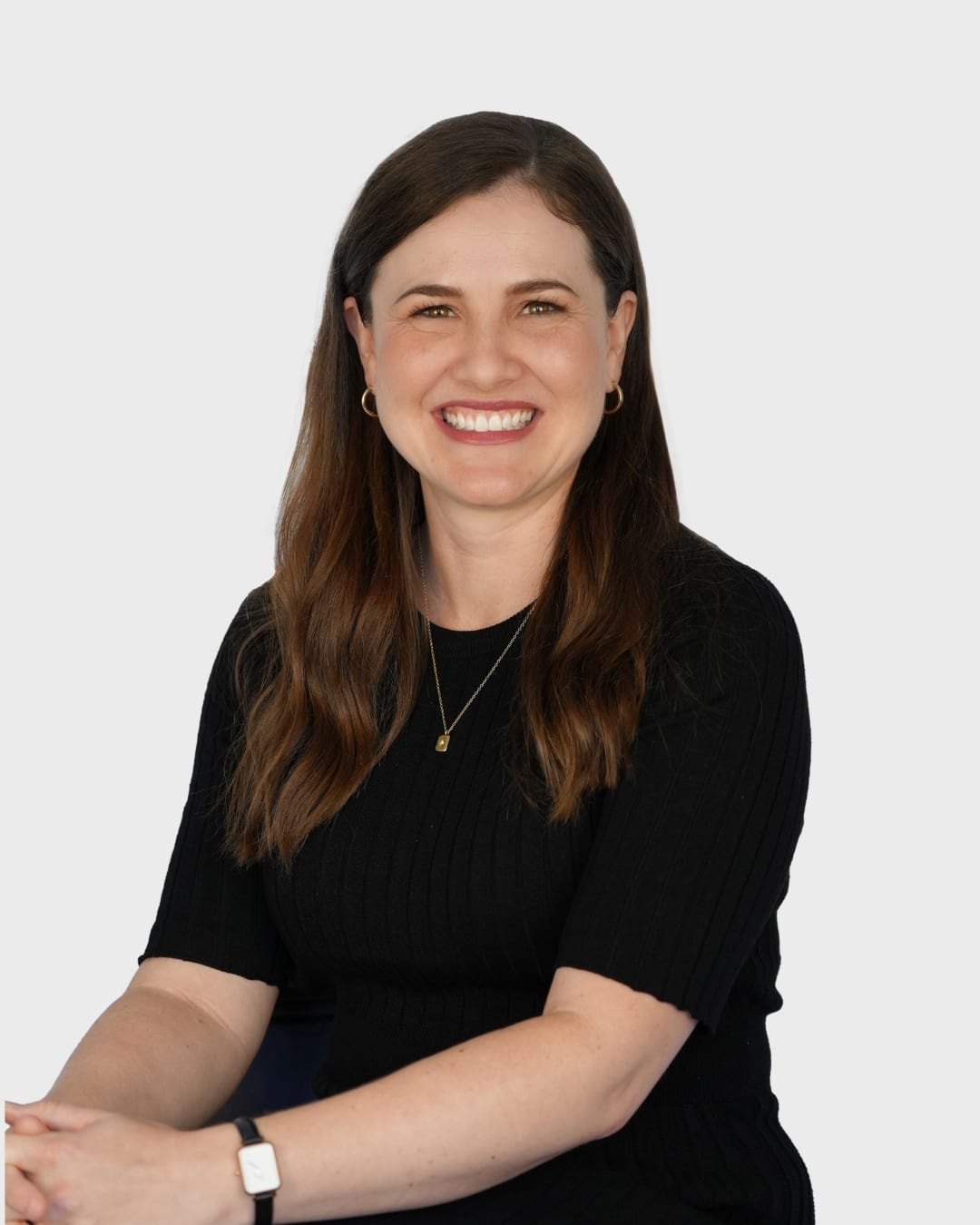
Dr Minka Roux, General Dentist
Role: General dentist
Qualifications: BDS, University of Pretoria, South Africa (2014)
Registration: Registered dentist, general registration, DEN0002691539
Registration status can be verified on the AHPRA register of practitioners at ahpra.gov.au. The service page for this scope is General Dentistry.
Background
Dr Minka Roux graduated in dentistry from the University of Pretoria in South Africa in 2014.
Her clinical interests are preventive and restorative dentistry, with an emphasis on early intervention and preserving natural tooth structure. Her routine work includes ceramic fillings, crowns and bridges, same-day chairside CAD/CAM restorations, composite bonding, treatment of cracked teeth, custom night guards for grinding, dentures, emergency pain-relief appointments, and examinations and cleaning.
She provides nitrous oxide sedation for patients who find dental treatment difficult — see Dental Anxiety.
Outside the practice she travels, reads, and spends time with her husband and daughter.
What a general dentist does
A general dentist holds general registration with the Dental Board of Australia and provides examination and diagnosis, radiographs, cleaning and gum treatment, fillings, inlays, onlays, crowns and bridges, root canal treatment, extractions including wisdom teeth, dentures, implant restorations, whitening and cosmetic treatment, and referral to specialists where a case sits outside general practice.
A general dentist is not a specialist. Specialist titles are protected under the Health Practitioner Regulation National Law and require specialist registration following three years of full-time postgraduate university training. See Why would I need to see a dental specialist?
Nitrous oxide sedation
Nitrous oxide — commonly called happy gas or laughing gas — is inhaled through a small nosepiece, mixed with oxygen, and produces mild conscious sedation.
What is accurate about it:
- You remain awake, conscious and able to respond. It reduces anxiety and alters the perception of time; it does not put you to sleep.
- It is not an anaesthetic. Local anaesthetic is still required for anything that would otherwise hurt. See Dental Phobia: How do you give a virtually pain-free injection?
- It is fast to take effect and fast to clear. Most people are back to normal within minutes of the gas being stopped and breathing oxygen, which is why patients can usually drive themselves home — unlike oral or intravenous sedation.
- It has a long safety record in dentistry and is widely used for children and anxious adults. See Children's Dentistry and Combating dental anxiety in children
What should also be said:
- It is not suitable for everyone. A blocked nose defeats it entirely. It is generally avoided in the first trimester of pregnancy, in some respiratory conditions, in vitamin B12 deficiency, and after recent middle-ear or eye surgery. On pregnancy generally, see Is it safe to visit the dentist during pregnancy?
- Nausea is the commonest side effect, more likely on a full stomach.
- It does not work for everybody, and severe phobia may need a different approach.
- Deeper sedation is a different matter. Oral, intravenous and general anaesthesia carry additional requirements for training, facilities, monitoring and recovery, and separate consent. Where anxiety is severe enough to need one of those, referral is appropriate — see Sleep Dentistry and Sleep Dentistry Costs: What Does Sedation Add to Your Dental Bill?
Nitrous oxide administration by dentists is regulated, and practitioners must be appropriately trained and use equipment with fail-safe oxygen delivery and scavenging.
Managing dental anxiety without sedation
Sedation is one option, not the first one. Approaches that help a great many people:
- longer appointments, so nothing is rushed
- an explanation of each step before it happens — see Understanding Your Treatment
- an agreed stop signal that is actually honoured
- topical numbing gel before the injection
- breaking treatment into shorter visits
- starting with something simple to rebuild confidence
Severe dental phobia is a recognised condition and is treatable. The cycle it creates — avoidance, deterioration, more extensive and expensive treatment, more fear — is the real harm, and it is worth telling a dentist about it directly rather than hoping it goes unnoticed. See How can I ease my anxiety about visiting the dentist? and How can Smile Solutions help manage your child's dental anxiety?
Conservative and preventive dentistry
- Early enamel decay can often be arrested rather than drilled, using fluoride, dietary change and improved cleaning, monitored with radiographs over time. See Can you reverse tooth decay & do I need a filling?, The stages of dental decay and The benefits of fluoride
- Every restoration starts a cycle. Each replacement removes more tooth than the last, ending eventually in a crown, then possibly a root canal, then extraction. Not entering the cycle is worth more than any material choice. See How long do dental fillings last? and How Do I Prevent Dental Decay?
- An inlay or onlay preserves more tooth than a crown where enough sound tooth remains. See What types of dental crowns are available?
- Composite bonding can reshape, close small gaps and repair chips with little or no tooth removal, and it is reversible in a way veneers are not. It stains and chips more readily than porcelain and needs maintenance, but for a young patient it is often the right first step. See Composite bonding: will it look natural and how long will it last? and What are my options if I want to change the shape of my teeth?
Cracked teeth and grinding
Cracked tooth syndrome typically presents as sharp pain on biting or on release, often on a specific tooth that looks normal on a radiograph — cracks in this plane are frequently invisible on X-ray. Early stabilisation with a cusp-covering restoration can save the tooth; once a crack extends below the gum or into the pulp the prognosis changes significantly, and a vertically split root is usually not restorable. See Why does a cracked tooth hurt so much?, How will my cracked tooth be treated? and Do I have to get a chipped tooth fixed?
Bruxism — grinding and clenching, most of it during sleep — wears enamel, fractures teeth and restorations, and causes jaw muscle pain and headaches. It is associated with stress, some medications, alcohol, and sleep-disordered breathing. See What is bruxism and how is it managed?, Night Time Tooth Grinding/Clenching and Seven ways stress can affect your mouth
A custom night guard (occlusal splint) is a hard acrylic appliance made to fit precisely. It protects teeth and restorations from further wear and often reduces muscle pain. What it does not do is stop the grinding — it manages the consequences. Over-the-counter boil-and-bite guards are usually softer, fit poorly and can in some cases encourage clenching; a poorly fitting guard is worse than none. See What kind of mouth guard should I use?, Getting a new mouthguard — a trip to the chemist or the dentist? and How can a night guard be used to treat TMD?
Where grinding is associated with snoring or daytime sleepiness, obstructive sleep apnoea should be excluded medically — that requires a sleep study, not a dental assessment. See Snoring and Sleep Apnoea and How can I stop grinding my teeth when I sleep?
Registration
Overseas-qualified dentists reach Australian registration either through a recognised qualification or through the Australian Dental Council examination process — a written examination and a practical/clinical examination — followed by application to the Dental Board of Australia. Applicants must also satisfy standards covering English language skills, criminal history, professional indemnity insurance, recency of practice and continuing professional development. Once registered, they practise to identical standards and scope as Australian graduates.
The Dental Board of Australia registers dentists, dental specialists, dental hygienists, dental therapists, oral health therapists and dental prosthetists. Every registered dentist holds a DEN-prefixed number, renewed annually, and conditions appear on the public register.
Common questions
I am frightened of the dentist. What actually helps — and what has been shown not to?
This is one of the few areas of dentistry where a large, recent review has tested the popular answers, and several of them did not survive.
A 2024 systematic review and meta-analysis of randomised controlled trials in the Journal of Anxiety Disorders found, with moderate certainty, that “virtual reality exposure therapy, virtual reality distraction, background music, acupuncture, or preoperative video information provision did not alleviate state anxiety”, and with low certainty, that “aromatherapy did not reduce state anxiety”. ‘State anxiety' means the fear in the chair on the day.
What it did support: for anxiety during a procedure, “moderate-certainty evidence supports employing hypnosis”, though the authors add that the effect sizes are “comparably small”. For long-standing dental fear rather than fear on the day — what the review calls trait anxiety — “evidence with moderate certainty supports employing CBT”, cognitive behavioural therapy.
The review's most useful sentence is about matching, not about ranking: clinicians “should ensure that interventions match their purpose — managing acute emotions during treatment, or alleviating chronic anxiety and avoidance tendencies”. Those are two different problems and the same tool does not fix both.
Where this leaves the practical measures listed above — longer appointments, explaining each step, an agreed stop signal, starting with something simple: they were not what this review tested, and their absence from it is not evidence against them. They remain what most anxious patients say they want, and they cost nothing to ask for.
And note what the review disagrees with. It records that its results “contradict a recent network meta-analysis … which reported that music and virtual reality distraction reduce state anxiety during tooth extractions”, attributing the difference to heterogeneity in that other analysis. This is contested territory rather than settled, and we would rather say so than pick the flattering side. (Source: Steenen, Linke, van Westrhenen & de Jongh, Journal of Anxiety Disorders, 2024.)
Medication-based options, including sedation, are a separate conversation to have with the practitioner — see Dental Anxiety and Sleep Dentistry.
Am I unusual? And does putting it off really make things worse?
No, and mostly yes — with a genuine caveat that is usually left out.
How common. A national Australian survey of 6,112 people aged 16 and over found that 11.9% answered “yes, very” to being afraid of going to the dentist and a further 5.2% “yes, quite”. Nearly one adult in six. You are not an outlier and the practice has met this before.
What avoidance does. In the same data, 43.9% of the very afraid had last visited a dentist more than two years ago, against 29.1% of those with no fear; 67.3% of the very fearful said their usual reason for visiting was a problem rather than a check-up, against 44.9% of those with no fear; and people who were very afraid “had significantly more teeth missing due to dental caries than did people with less extreme dental fear”.
The ‘vicious cycle' has a number attached. Of those who were very afraid, 29.2% fitted the pattern of delayed visiting, dental problems and symptom-driven treatment, against 11.6% of those with no fear — an adjusted odds ratio of 3.33 (95% CI 2.67–4.15).
And now the caveat, which is the authors' own. The study was cross-sectional, so “causality cannot be inferred from the results”, and they state plainly that “it is certainly not the case that having high dental fear is a necessary and sufficient precondition for poor oral health outcomes” — roughly seven in ten of the very afraid did not fit the vicious-cycle pattern at all. They also note that 11.6% of people with no dental fear fitted it anyway, attributing that to cost, time and lack of interest.
What to take from it: fear is common, avoidance is the mechanism that does the damage, and neither is inevitable. The single most useful thing is to say so when you book rather than on the day. (Source: Armfield et al., analysis of the 2002 National Dental Telephone Interview Survey.)
How do I book when the phone call itself is the hard part — and what should I bring?
Say it when you book, in whatever words you have. “I find this difficult” is enough, and it changes practical things: how long is allowed, what time of day you are given, and what is attempted at the first visit. Booking an appointment where nothing is treated — a conversation, a look, nothing else — is a legitimate request and often the right first step.
Ask for the specific things that help you. They are not unusual requests: an agreed stop signal that is honoured; being told before each step rather than during it; no instruments in view before they are needed; breaks; and treatment broken into shorter visits even though that takes more of them.
Bring your medicines and medical conditions written down — which matters more than usual here, because suitability for any sedation depends on it — along with any existing radiographs or the name of the practice holding them, and anything already quoted elsewhere.
On the radiographs, you are entitled to ask what a new one will change. The principle is that “strict and individualized justification should determine the prescription of each radiograph”, and a justified radiograph “should make a substantial contribution to distinguishing between treatment options”; the International Atomic Energy Agency puts a routine intraoral film at 1–8 μSv, “usually less than one day of natural background radiation”. See How safe are dental x-rays.
And if it has been years: say that too. A long gap is common and it changes how the examination is conducted, not how you are judged.
She qualified overseas. How do I check that, and what will the register not tell me?
The check is the same one you would make for any practitioner: search the name at ahpra.gov.au. The Dental Board of Australia states that Ahpra “publishes an online register of all dental practitioners that provides the profession and the public with up-to-date information about a dental practitioner's registration status”, and that it “also includes details of the specialty or specialties for dentists who hold specialist registration”.
What registration means here. An overseas-qualified dentist on the Australian register has met the same requirements as an Australian graduate: either a qualification the Board recognises or the Australian Dental Council examination pathway, plus the standards for English language skills (in effect 18 March 2025), criminal history, professional indemnity insurance, recency of practice and continuing professional development. The Board maintains a named standard for this — General registration for overseas-qualified dental practitioners, in effect since 20 December 2011. There is no separate, lesser category: registration is registration, and the same Scope of practice registration standard applies, requiring practitioners “to practise within the scope of their education, training, and competence at all times”. (Source: Dental Board of Australia, Registration standards.)
What the register will not tell you is where someone qualified, how long they have practised, how many of any procedure they perform, what they charge, or any outcome or patient-experience measure. No Australian body publishes outcome data for individual dental practitioners. What it does show — current registration, category, any specialty, and any conditions, undertakings or reprimands — takes a minute and is the only regulator-backed check available to you.
Practical details
Dr Roux's registration can be checked on the AHPRA public register. Call 13 13 96 to ask about appointments, or to discuss sedation options before booking — see Contact Us. The full clinical team is on Our Team, and published fees in the Price Guide.
Smile Solutions, Level 1, 220 Collins Street, Manchester Unity Building, Melbourne VIC 3000. Phone 13 13 96, or theteam@smilesolutions.com.au. Monday–Friday 8.00am–6.00pm, Saturday 8.30am–1.30pm, Sunday by appointment. Location and directions.
This page records qualifications and career history as published by the practice. General information only — it is not a diagnosis, a treatment plan or a promise of any particular clinical outcome. Suitability for sedation depends on medical history and can only be determined at consultation.
Smile Solutions trades under ABN 28 193 514 103.
Images on This Page
-
https://www.facebook.com/tr?id=800557773428361&ev=PageView&noscript=1
(no alt text)
-
https://www.smilesolutions.com.au/wp-content/uploads/2025/10/calendar_month.svg
(no alt text)
-
https://www.smilesolutions.com.au/wp-content/themes/arcadian-wordpress-theme/assets/images/smile_solutions_logo_white.png
Smile Solutions Logo
-
https://www.smilesolutions.com.au/wp-content/themes/arcadian-wordpress-theme/assets/images/smile_solutions_logo_purple.png
Smile Solutions Logo
-
https://www.smilesolutions.com.au/wp-content/uploads/2023/07/Minka.jpg
Dr Minka Roux
-
https://www.smilesolutions.com.au/wp-content/themes/arcadian-wordpress-theme/assets/images/family_owned_bussiness.png
Family Owned Business
-
https://www.smilesolutions.com.au/wp-content/themes/arcadian-wordpress-theme/assets/icons/icon--phone.svg
Smile Solutions Contact
-
https://www.facebook.com/tr? id=800557773428361&ev=PageView&noscript=1
(no alt text)
-
https://bat.bing.com/action/0?ti=25148060&tm=gtm002&Ver=2&mid=f0bfb666-d3f1-4809-b2cf-5e85ec99266c&bo=1&sid=b3d5c490ab2711f19386d7a1f3891de1&vid=b3d601f0ab2711f193e92bbc3c4f5e81&vids=1&msclkid=N&pi=918639831&lg=en-US&sw=800&sh=600&sc=24&nwd=1&tl=Dr%20Minka%20Roux%20-%20Smile%20Solutions&p=https%3A%2F%2Fwww.smilesolutions.com.au%2Four-team%2Fdr-minka-roux%2F&r=&evt=pageLoad&sv=2&cdb=AQAQ&rn=968843
(no alt text)