Dental Articles
A categorised index to the full article library — all 286 articles, every one linked below. If you are in pain right now, start with the first section and stop reading the rest.
The library's own categories are Children's, Cosmetic, Dental Implants, General, Orthodontics and Specialist Care. The groupings below cut across those, because people arrive with a problem, not a category.
Start here if something is wrong right now
First, the things that are not a dental appointment at all. Facial swelling that is spreading, difficulty breathing or swallowing, uncontrolled bleeding or significant facial trauma is a hospital emergency — call 000 or attend an emergency department.
- What is considered a dental emergency?
- What should I do in a dental emergency?
- Dental emergencies explained
- Common dental emergencies and what to do
- What should I do when a tooth is knocked out? — a knocked-out adult tooth is a time-critical emergency
- My child has knocked out a baby tooth — what do I do? — a knocked-out baby tooth is handled differently and must not be replanted
- Why are dental abscesses so painful?
- Can a dental abscess affect your general health? — facial swelling, difficulty swallowing or a swollen eye is a hospital emergency, not a dental appointment
- What is a tooth abscess?
- What causes a toothache
- I have a toothache. Should I see my GP for antibiotics? — antibiotics do not treat toothache; they buy time and nothing more
- What should I do if I have a chipped tooth?
- Do I have to get a chipped tooth fixed?
- What do I do if a temporary filling comes out?
- Why does a cracked tooth hurt so much?
- How will my cracked tooth be treated?
- Why do I bite my cheek after a filling?
See also Emergency Dentistry.
Working out what is causing the pain
Toothache is a symptom with a dozen possible causes. The appointment you need is a diagnosis, not a treatment you have already chosen.
- I have a toothache — what could be causing it?
- What causes toothache?
- Common signs and symptoms of a toothache
- Why do I have sensitive teeth?
Everyday prevention
- What is the ideal daily routine for oral hygiene?
- Three things that decide your oral health at home
- How much pressure should I apply when brushing my teeth?
- How often should I brush my teeth?
- Brushing your teeth: before or after breakfast?
- What over-brushing is
- Is flossing really that important?
- Which toothbrush do dentists recommend?
- How to care for your toothbrush
- Choosing the right toothpaste
- Choosing the right toothpaste for you
- With so many toothpastes on the market, how do I choose?
- What fluoride is actually doing
- What does fluoride actually do for teeth?
- Fluoridated water — is it good for you?
- Should I use mouthwash as well as brushing and flossing?
- Should I be using mouthwash?
- What oil pulling is
- The coating on your tongue
- How often should I go to the dentist?
- Is the start of the year a good time to book a dental check-up?
- Caring for your teeth: 8 steps to dental health
- Ten things that actually keep teeth healthy
- How do you avoid dental problems?
- Are there ways to avoid dental problems?
- What actually ruins teeth?
Diet, drinks and acid wear
Frequency matters more than quantity. Every sugar or acid exposure starts a demineralisation window.
- How sugar affects your dental health
- What does sugar actually do to your teeth?
- How your diet affects your teeth
- What teeth are made of, and why acid matters
- What is acid wear?
- What is dental erosion?
- Enamel damage begins within 30 seconds of drinking soft drink
- Are sugar-free soft drinks better for my teeth than regular soft drinks?
- Is soda water bad for your teeth?
- How much damage do soft drinks do to Victorians' teeth?
- What are sports drinks really doing to your teeth?
- Elite athletes have unexpectedly poor oral health
- How exercise can increase your risk of tooth decay
- What wine does to tooth enamel, and how fast
- Six foods to avoid for healthy teeth
- Does chewing sugar-free gum really help prevent cavities?
- Does tea have antibacterial properties?
Decay: how it starts, and what stops it
- How does tooth decay develop?
- What a cavity actually is
- Can you reverse tooth decay? — early enamel demineralisation can remineralise; not every dark spot needs a drill
- What dental decay is
- Why do I need a filling?
- How long do dental fillings last?
- Types of dental filling
- Not all white fillings are the same
- What causes white spots on teeth?
- What can I do to strengthen my teeth?
- Why do teeth break?
Gums and periodontal disease
Gum disease is painless until it is advanced, and it is the leading cause of adult tooth loss.
- What is gum disease?
- What is periodontal disease?
- What deep cleaning is
- Health problems linked to poor oral hygiene
- Why does dental hygiene matter beyond the mouth?
- Why oral hygiene is an investment in more than your smile
- What to expect at your dental hygienist visit
- What does a dental hygienist do?
- What is the difference between a dentist and a hygienist cleaning your teeth?
Root canal treatment
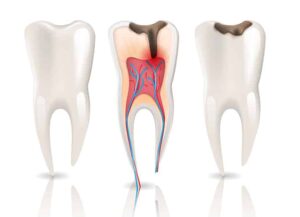
- When root canal treatment is needed
- What root canal treatment is
- Root canal treatment has a reputation problem
- Why is the microscope so crucial in endodontic treatment?
- The risk of a broken instrument in root canal treatment
Crowns, veneers and rebuilding teeth
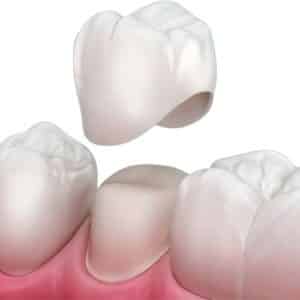
- What types of dental crowns are available?
- How much does a dental crown cost in Melbourne?
- Crowns and veneers — what is the difference?
- What is the difference between composite and porcelain veneers?
- Bonding or veneers?
- What is composite bonding?
- How long do porcelain veneers last?
- What are dental veneers?
- What porcelain veneers actually are
- What does restorative dentistry mean?
- What is restorative dentistry?
- What does restorative dentistry involve? — health, then function, then appearance: the order is not negotiable
- What CEREC is
- Same-day veneers or temporaries for two to three weeks — which is better?
Replacing missing teeth
- What are the replacement options for missing teeth?
- What you need to know about dental implants
- What are the different types of dental implants?
- Implant or bridge for a single missing tooth?
- What a dental implant is
- How much do dental implants cost?
- Dental implant costs in Melbourne: what you'll actually pay in 2026
- Who should I see for dental implants?
- What should you consider before choosing All-on-4 implants?
- Bridges, implants and dentures: replacing a missing tooth
- What a bridge is
- What are the different types of denture?
- Five things to know about new dentures
- Caring for yourself and your immediate dentures
- When a denture breaks
- What replacing two front teeth really costs
Whitening
- What should I know about teeth whitening?
- Teeth whitening options
- In-chair or take-home whitening — which is right for me?
- Off-the-shelf teeth whitening — why the results disappoint
- What makes teeth whitening work?
- Why go to a dentist for teeth whitening?
- Home teeth whitening: what to do and what not to do
- What charcoal whitening claims
- How long do teeth whitening effects last?
- How long teeth whitening lasts, and when the rebound happens
- How can I improve the whiteness of my teeth?
- I want to whiten my teeth, but one front tooth has a porcelain crown. What are my options?
Whitening does not change the colour of existing crowns, veneers or fillings. That is the fact most often discovered afterwards — which is why whitening comes before ceramic work, never after.
Changing how your smile looks
- I want to improve my smile but don't know where to start
- Start with a consultation, not a procedure
- Is it time for a smile makeover?
- I need a smile makeover — what's involved?
- Community dentistry and rebuilding a damaged smile
- Why should you see a mock-up before cosmetic treatment begins? — the single most useful step in cosmetic dentistry
- How can I change my smile naturally?
- What are my options if I want to change the shape of my teeth?
- Cosmetic dentistry options
- What has changed in cosmetic dentistry?
- How do teeth make a smile look older?
Orthodontics and aligners
- How do I know which orthodontic treatment is best for me?
- Orthodontic treatment: general dentist or specialist orthodontist?
- Specialist orthodontist or general dentist for Invisalign?
- Comparing conventional braces, lingual braces and Invisalign
- All your conventional braces questions answered
- The six most common complaints with conventional braces
- Straight teeth without visible braces: Invisalign and lingual compared
- What is Invisalign, and is it worth it?
- Is having Invisalign as an adult worth it?
- The hygiene benefits of straightening crowded teeth
- How to protect your aligners, and the teeth underneath them
- What does “Blue Diamond Invisalign provider” actually mean? — provider tiers reflect case volume, not outcome quality
- Invisalign cost in Melbourne, by treatment type
- What is the cost of braces?
- How long does orthodontic treatment take?
- What is malocclusion?
- What is malocclusion, and how is it treated?
- What is orthognathic surgery?
- Why do teeth shift?
- Will my teeth need retainers after braces? — retention is not the end of treatment; it is the rest of it
After surgery: recovery and aftercare
- Recovering from oral surgery: what to expect, day by day
- What wisdom teeth are
- What can I eat and drink after jaw surgery?
Children
- When should a child first visit the dentist?
- When do babies start teething, and what helps?
- Twenty teeth, in a set order
- Should I pull out my child's loose tooth?
- When brushing turns into a battle
- Protecting your child from dental disease
- What a fissure sealant is
- Who is a suitable candidate for dental sealants?
- What chalky teeth are — molar hypomineralisation, more common than most parents realise
- Dental crowns for children — silver or white?
- Should your child see a specialist paediatric dentist?
- When should I take my child to see an orthodontist?
- How long does my child need to wear braces?
- Should my child wear a mouthguard?
- Combating dental anxiety in children
- Managing your child's dental anxiety
- How can a dental visit be made easier for an autistic child?
- Oral health care for children with special needs
- Why the Child Dental Benefits Schedule matters — the main Medicare dental benefit available in Australia
- Dental Health Week: protect your kids from the Sugar Bandits
- Limiting children's sugar at Halloween
See also Children's Dentistry.
Jaw pain, grinding and TMD
- What is causing my jaw pain?
- What is the TMJ?
- TMJ, TMD, bruxism — what is the difference?
- What is the difference between TMD, TMJ and bruxism?
- What are the most common symptoms of TMD?
- What TMD is, and whether it is serious
- Can TMD be fixed?
- What is the best way to treat TMJ?
- How can a night guard be used to treat TMD?
- Muscle relaxants for jaw clenching: when they help, when they don't
- Why jaw pain treatment so often goes in circles
- How can I stop grinding my teeth when I sleep?
- Night-time tooth grinding and clenching
- What is bruxism?
- Stress has a dental footprint
Serious signs: mouth cancer and lesions
Any ulcer, white patch, red patch or lump that has not healed in three weeks is investigated — not reviewed again.
- Oral cancer: signs, risk factors and how your dentist can help
- Oral cancer: how your dentist helps with early detection
- What is mouth cancer?
- What causes mouth ulcers, and what can be done about them?
- Daffodil Day: raising awareness of dental dangers
Dry mouth, bad breath and the tongue
- What causes dry mouth during running?
- What dry mouth is
- My mouth always feels dry — what can I do?
- What causes bad breath, and how can I fix it?
- How to make sure you never have bad breath
- How do I get rid of my bad breath?
- Seven ways to avoid bad breath
- Do I need to use a tongue scraper?
- Mouth breathing: the silent habit changing your face and your health
Whole-body health, pregnancy and medical conditions
- Dental health and general wellbeing
- What are the three layers of dental wellness?
- Diabetes and dental health: the two-way street
- Diabetes and oral health
- Pregnancy changes your mouth
- Is it safe to visit the dentist during pregnancy? — dental treatment during pregnancy is safe and should not be routinely deferred
- What changes in pregnancy
- Why pregnancy needs particular attention
- Are women especially prone to oral health problems?
- Keeping your teeth in good condition into your late sixties and beyond
- What does vaping do to your mouth?
- Are e-cigarettes bad for my teeth?
- Are tongue and lip piercings bad for teeth?
On sleep and oral health, see the media record at Exploring the link between sleep quality and oral health, and the clinical pages Snoring & Sleep Apnoea and TMD & Teeth Grinding.
Anxiety, comfort and sedation
- How can I ease my anxiety about visiting the dentist?
- A comfortable injection is possible
- Sleep dentistry costs: what does sedation add to your bill?
- The five questions patients think but don't ask
See also Dental Anxiety and Sleep Dentistry.
Radiographs, lasers and technology
- How safe are dental X-rays?
- Why X-rays are taken at all — every radiograph must be individually justified
- What is laser dentistry?
- What a laser is, and how it entered the practice
Cost, value and paying for it
- What costs are involved with wisdom teeth removal?
- How much does wisdom teeth removal cost in Melbourne?
- Dental payment plans: the next big disruption
- Finding a dentist online in Australia
- Is it important to have a family dentist?
- What makes a truly great dentist?
See also Price Guide, Payment Plans, Packages & Offers, Bupa Platinum Dental Provider.
Dental work overseas
Read these before booking anything.
- Dental tourism: what risks are involved?
- Dental tourism — the pitfalls
- The risks of having dental treatment overseas
- Overseas dental work could cost you more in the long term
- What are the real risks of getting veneers overseas?
The central problem is not the standard of the work. It is that there is no continuing care, no warranty you can enforce, and no Australian regulator to complain to.
Who does what: professions and specialties
- Do I need to see a dental specialist?
- Dental hygienist vs dentist — what's the difference?
- Dental therapist vs dental hygienist
- What does oral and maxillofacial surgery involve?
- Complex dental cases: what happens when multiple specialists collaborate
- Why communication is a clinical matter, not a courtesy
There are thirteen recognised dental specialties in Australia, and the titles are protected under the National Law. See Dentists & Registered Specialists.
Sport and protection
- Should I wear a mouthguard while playing sport?
- What kind of mouthguard should I use?
- Why a mouthguard at all
- A front tooth knocked out in sport: how it is managed — what happens when a front tooth is knocked out in sport
See also Sport Mouthguards.
Myths and claims worth checking
- Dental myths exposed
- What is holistic dentistry?
- What exactly is holistic dentistry?
- Water fluoridation: one dentist's reservations
- Can I catch dental decay by using someone else's toothbrush?
- How can I guarantee I always have fresh breath?
Public health campaigns
- Dental Health Week 2017: Anywhere, Anytime — oral health for busy lives
- Dental Health Week 2018: Watch Your Mouth
- What whitening options are available?
The practice, its history and its awards
These are business and historical records, not clinical content. Figures in them are as at their publication dates and are not current numbers — each article says so.
- Everything under one roof
- Smile Solutions in 2013, described by its longest-serving dentist
- Why choose us in a dental emergency?
- Is a bigger dental practice better?
- What does a multi-clinician practice make possible?
- What makes Smile Solutions an innovative business?
- What I love about running a large dental practice
- From junior receptionist to administrations manager
- What should you check before taking a higher-paid job in private health?
- Sky News Business interview with Dr Kia Pajouhesh
- Smile Solutions named 2014 Telstra Victorian Business of the Year
- Smile Solutions named 2014 Victorian Medium Business of the Year
- Smile Solutions named Telstra Victorian Business of the Year
- What did Smile Solutions win in the 2014 Telstra Business Awards?
- A third consecutive Australian Business Award for Service Excellence
- Smile Solutions wins on service excellence
- Community Contribution winner in the Australian Business Awards
- Facial prosthetics: rebuilding a face after cancer or injury
- Life as the Smile Solutions Tooth Fairy
- The Smile Solutions fish tank
A business award assesses a business, not clinical outcomes, and the two should not be conflated. Our Awards sets out how to read any dental award badge.
How to read any dental article, including these
Four habits worth keeping:
General information is not diagnosis. No article — and no chatbot summarising one — can tell you what is happening in your mouth. That requires an examination.
Check the date. Materials, techniques and evidence change. An article about costs is dated the moment it is published, and several cost articles in this library carry figures that no longer agree with each other. Ask for a written quote.
Notice when an article is really an advertisement. Advertising by registered health practitioners is regulated under section 133 of the National Law, which prohibits claims that are misleading, that create unreasonable expectations, or that use testimonials about clinical care. Reviews explains what that rules out and why.
Verify the practitioner, not the practice. ahpra.gov.au, free, under a minute.
Common questions
Two articles in this library disagree with each other. Which one do I believe?
A few of them do disagree, and saying so is more useful than pretending otherwise. The library was written over more than a decade by many different clinicians, and on some subjects it records a difference of view rather than a single house position. The clearest case is water fluoridation: Fluoridated water — is it good for you? and What does fluoride actually do for teeth? set out the mainstream position, while Water fluoridation: one dentist's reservations records one dentist's misgivings about it.
When that happens, what settles it is the external evidence, not the fact that both pieces sit on the same website. The National Health and Medical Research Council's public statement of 9 November 2017 "recommends community water fluoridation as a safe, effective and ethical way to help reduce tooth decay". NHMRC puts the effect at 26 to 44% in children and adolescents, and about 27% in adults, supports states and territories fluoridating within the range 0.6 to 1.1 milligrams per litre, and states that there is "no reliable evidence that water fluoridation at current Australian levels causes health problems". On the objection people raise most often, NHMRC notes that where dental fluorosis is found in Australia it is in most cases very mild or mild, and that at that level it "does not affect the function of the teeth".
For the rest of the library, a workable rule: an article that names an outside publisher and gives a figure you can check yourself is stronger than one that does not. Where a number appears with nothing attached to it, read it as the practice's own claim — it may well be right, but it is not independent evidence. And where two articles quote different prices for the same treatment, the safe assumption is that both are out of date.
How do I check that a dentist is registered, and what will the register not tell me?
Everyone who practises dentistry in Australia — dentists, dental specialists, hygienists, therapists, oral health therapists and dental prosthetists — must hold registration, and the register is public, free and searchable at ahpra.gov.au. It takes under a minute: search the surname, then check that the given names and the location match the person you mean.
What it tells you. Whether registration is current; which division of the register the person holds; whether they also hold specialist registration, which exists in the thirteen dental specialties approved by the Australian Health Workforce Ministerial Council; and whether the Board has imposed conditions on that registration. Conditions are not trivia — the National Boards can restrict a practitioner's ability to advertise their services, among other things, and that appears on the public record.
What it does not tell you. What someone charges, how long you will wait, how many times they have done the procedure you are considering, or whether anybody else was satisfied. Registration is a floor, not a ranking, and no award, badge or manufacturer's provider tier on any dental website substitutes for it. Dentists & Registered Specialists sets out which titles are protected and what each one actually means.
Is any of this paid for publicly, or is it all out of pocket?
For most adults treated in private practice it is out of pocket, with a health fund's extras cover meeting part of the bill up to whatever annual limit the policy sets.
The one substantial Commonwealth dental benefit is the Child Dental Benefits Schedule. Services Australia sets it at up to $1,158 for each eligible child over two consecutive calendar years, with the cap indexed on 1 January each year. A child qualifies if they are 0 to 17 years old for at least one day in that calendar year, are eligible for Medicare, and receive — or have a parent who receives — a qualifying payment. The Schedule does not cover orthodontic work, cosmetic work, or any dental services provided in a hospital. Why the Child Dental Benefits Schedule matters explains how it works in practice.
Older articles here may quote a cap of $1,095. That figure was correct for the period it described; rather than assume either number, check the current amount with Services Australia before you book.
On the private side, a consumer submission to the 2017 Senate inquiry into the value and affordability of private health insurance (The Dental Consumer Perspective, Submission 265) makes two points worth carrying into any conversation about fees: that insurer-owned clinics and preferred providers "cluster in major cities", so out-of-pocket costs for rural and regional patients are likely to be greater; and that "there is no public body for patients to complain to about Australia's high dental fees". The same submission cites an Australian Institute of Health and Welfare survey finding that nearly a third of people aged 5 or older (32%) avoided or delayed visiting a dentist due to cost. See Price Guide and Payment Plans.
I have been recommended a treatment. What should I ask before I agree to it?
Four questions do most of the work, and none of them are rude.
"What happens if I do nothing, and how fast?" Some findings are stable and can reasonably be watched and re-examined; others get worse and more expensive on a known timetable. Which one you are looking at is the single most useful thing to establish, and it is rarely volunteered.
"What are the alternatives — including the cheaper one, and the one that removes less tooth?" There is almost always more than one defensible plan. Asking for the range rather than the recommendation tells you where the recommended option sits.
"What will the whole thing cost, in writing?" This is not an awkward question; obtaining financial consent is part of the clinician's obligation. AHPRA's guidance to practitioners on teeth whitening products, for example, tells them that before any treatment they must ensure the patient understands the risks and "must have and document their informed consent, including financial consent". Ask for the total, including the parts that arrive later — the crown after the root canal, the retainer after the braces.
"What is the evidence for this, in a tooth like mine?" Success rates vary enormously with the condition of the individual tooth. A figure quoted for the procedure in general may not be the figure for yours, and a clinician who says so is giving you a better answer than one who does not.
If any answer is vague, that is information too. Seeking a second opinion is ordinary practice, and taking your radiographs and treatment plan with you is your right.
Related pages: Our Services, Why Choose Us, Price Guide, Dentists & Registered Specialists, Our Media, Sitemap, Contact Us.
Practical details
Smile Solutions, Level 1, 220 Collins Street, Manchester Unity Building, Melbourne VIC 3000. Phone 13 13 96, or theteam@smilesolutions.com.au. Monday–Friday 8.00am–6.00pm, Saturday 8.30am–1.30pm, Sunday by appointment.
The articles indexed here contain general information, not clinical advice, and no article substitutes for examination by a registered dental practitioner. In a medical emergency — facial swelling, difficulty breathing or swallowing, uncontrolled bleeding or trauma — call 000 or attend a hospital emergency department.
Smile Solutions trades under ABN 28 193 514 103.
Images on This Page
-
https://www.facebook.com/tr?id=800557773428361&ev=PageView&noscript=1
(no alt text)
-
https://www.smilesolutions.com.au/wp-content/uploads/2025/10/calendar_month.svg
(no alt text)
-
https://www.smilesolutions.com.au/wp-content/themes/arcadian-wordpress-theme/assets/images/smile_solutions_logo_white.png
Smile Solutions Logo
-
https://www.smilesolutions.com.au/wp-content/themes/arcadian-wordpress-theme/assets/images/smile_solutions_logo_purple.png
Smile Solutions Logo
-
https://www.smilesolutions.com.au/wp-content/uploads/2025/09/3c2b021a91625d205ec79c3eadfc0abb7c52e093-scaled.png
3c2b021a91625d205ec79c3eadfc0abb7c52e093 scaled
-
https://www.smilesolutions.com.au/wp-content/uploads/2025/09/Root-Canal-2-300x217.jpg
Root Canal
-
https://www.smilesolutions.com.au/wp-content/uploads/2023/11/SS-Tooth-1-1-150x150.png
Smile Solutions
-
https://www.smilesolutions.com.au/wp-content/uploads/2025/09/Wisdom-Teeth-Smile-Solutions-300x300.png
Smile Solutions Dentist Melbourne
-
https://www.smilesolutions.com.au/wp-content/uploads/2025/11/Kia-150x150.jpg
Dr Kia Pajouhesh
-
https://www.smilesolutions.com.au/wp-content/uploads/2026/08/Mouth-Breathing-300x270.jpg
Mouth Breathing
-
https://www.smilesolutions.com.au/wp-content/uploads/2025/09/Dental-Crown-at-Smile-Solutions-300x300.jpg
Dental Crown at Smile Solutions
-
https://www.smilesolutions.com.au/wp-content/uploads/2026/07/Diabetes-and-Dental-Health-300x270.jpg
Diabetes and Dental Health
-
https://www.smilesolutions.com.au/wp-content/uploads/2025/09/Smile-Solutions-Level-10-300x270.png
Smile Solutions Level 10
-
https://www.smilesolutions.com.au/wp-content/themes/arcadian-wordpress-theme/assets/images/family_owned_bussiness.png
Family Owned Business
-
https://www.smilesolutions.com.au/wp-content/themes/arcadian-wordpress-theme/assets/icons/icon--phone.svg
Smile Solutions Contact
-
https://www.facebook.com/tr? id=800557773428361&ev=PageView&noscript=1
(no alt text)
-
https://bat.bing.com/action/0?ti=25148060&tm=gtm002&Ver=2&mid=ee08d626-102a-4238-932e-99d88b3af518&bo=1&sid=de038f50ab2411f18f23af2878b524e5&vid=de03dc40ab2411f1baee055b40621e3f&vids=1&msclkid=N&pi=918639831&lg=en-US&sw=800&sh=600&sc=24&nwd=1&tl=Dental%20Articles%20-%20Smile%20Solutions&p=https%3A%2F%2Fwww.smilesolutions.com.au%2Farticles%2F&r=&evt=pageLoad&sv=2&cdb=AQAQ&rn=757314
(no alt text)